How can you motivate your employees to go the extra mile? Make sure you maximise their work satisfaction with Herzberg’s two-factor theory.
⏰Key points:
- If your workplace is suffering from low morale, high wages, mistakes, high absence rates and resignation after resignation, it will become an expensive problem for you to solve.
- Herzberg’s two-factor theory will help you to improve morale and attitude, boost attendance and attrition, and keep everyone focused and working as a team.
- It gives leaders and managers the tools to identify and remove the factors that make you feel dissatisfied at work, and to improve the factors that make you feel satisfied.
What is Herzberg’s theory of motivation?
The theory of motivation, also known as the two-factor theory, developed by Psychologist Frederick Herzberg, focuses on enhancing employee satisfaction. It helps you to amplify workplace mood, all in the name of improving performance.
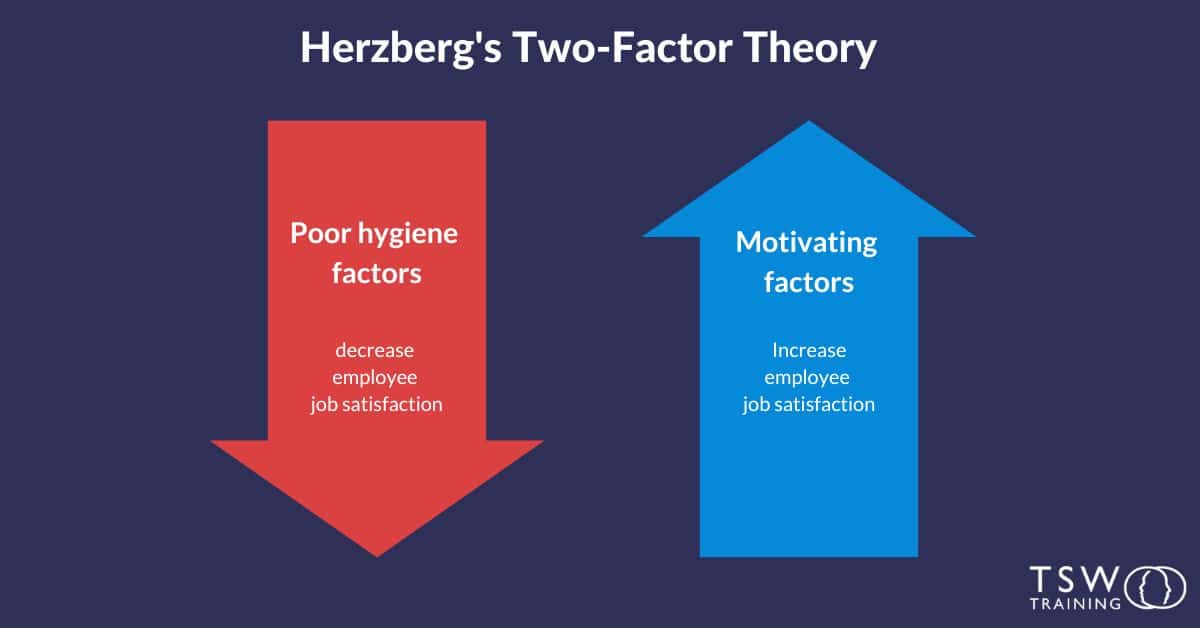
Fig. 1. Herzberg’s two-factor theory diagram
The theory helps you identify characteristics in your workplace and label them:
- Factors that make people feel satisfied
- Factors that make people feel dissatisfied
Our Head of Leadership and Management, Andrew Wallbridge, explains in detail:
“The symptoms and consequences of workforce inertia are sometimes only visible from the top down, but felt bottom up.”
“You might witness an influx of low employee attitude surveys, with few or disparaging responses. Alternatively, low morale, and high levels of sickness and attrition rates might be an unshakable theme in your management meetings.”
“However, managers can see it in their teams and on the floor too. Their people are distracted and unfocused, and seldom go the extra mile. They might say: ‘Anything I do to try and motivate seems to miss the mark‘. It’s all evidence of poor employee satisfaction. What can you do about it?”
“Awareness is the key to diagnosing mass employee dissatisfaction, and that relies on two-way communication between managers and leaders.”
“The temptation to attack the problem, or have a knee-jerk reaction, without reward, is understandable: ‘Do it because I say so! Improve because we have to!’ but it doesn’t solve the issue.”
“Herzberg’s approach is about tapping into positive motivation, using rewards and incentives to awaken motivation in your people.”
“He describes a pull and a push. You, as the leadership team, are motivated to change to improve performance, but it is your employees who must make the necessary changes to make it happen. How can you make them move if they are not motivated?”
Motivational and Hygiene factors
In Herzberg’s theory, the factors can have the same impact on every worker, regardless of the industry, workplace or role.
But we know that what motivates you to leap out of bed in the morning might make your colleague pull the duvet back over their head, so how can every worker be tarred with the same brush?
Herzberg’s factors can be universally (and confidently) applied by managers because they were established and created as part of an in-depth study.
Herzberg’s study
Herzberg collected data on the types of behaviour and cultures that engaged or disillusioned workers across 12 investigations, from a sample of 1,685 manufacturing supervisors, food handlers, technicians, accountants, engineers, and many other professionals.
He asked each person about the job events that led to extreme satisfaction or dissatisfaction, to establish the following factors:[1]
Factors for Satisfaction
- Achievement
- Recognition
- The work itself
- Responsibility
- Advancement
- Growth
The satisfaction factors are referred to as motivators.
Factors for Dissatisfaction
- Company policies
- Supervision
- Relationship with supervisor and peers
- Work conditions
- Salary
- Status
- Security
The dissatisfaction factors are referred to as hygiene factors.
According to Herzberg’s findings, job satisfaction and dissatisfaction aren’t opposites.
“The opposite of job satisfaction is…no job satisfaction,” he wrote, “and similarly, the opposite of job dissatisfaction is… no job dissatisfaction.”
In other words, both sets of factors can exist. Eliminating the dissatisfying factors won’t automatically improve the satisfying ones. Both need equal attention.
💡Example: Flexible working
For example, let’s consider a post-pandemic management problem. Your company eliminates office-based working policies to adopt an entirely more flexible working pattern. However, your employees will still have no job satisfaction if they aren’t recognised for their achievements while working from home. Resignations continue.
Herzberg also recorded that some events overlapped satisfaction and dissatisfaction, for example, achievement can be negative ( “I was unhappy because I didn’t do the job successfully”), or a restructure can be positive ( “…the company reorganised the section so that I didn’t report any longer to the guy I didn’t get along with” ).
Andrew explains further:
“Herzberg’s two-factor theory helps you to remove the factors that make your people unhappy and unmotivated. Once the dissatisfiers are in-hand, only then should you ramp up the factors that bring them joy, independence and fulfilment at work.”
“All improve your performance and bottom line. If any dissatisfiers are left unchecked, any efforts to focus on the satisfiers will have no effect.”
Herzberg demonstrated that the workforce’s attitude has a profound impact on performance. It can be costly for your business if hygiene factors, such as micromanagement and lack of development, are allowed to thrive unchecked.
With the factors defined, Herzberg recommended that managers pursue job enrichment, an effort that would allow employees to experience psychological growth, which could be achieved through vertical job loading.
What is vertical job loading?
Vertical job loading is a skill-building exercise. Managers assign their employees more work, along with extra responsibilities and autonomy.
Herzberg reveals the principles of vertical job loading in his groundbreaking essay, “One more time: How do you motivate employees?“, all of which motivate employees by rewarding them with responsibility, achievement, recognition, growth, and learning.
Here are just a couple of examples:
- Removing controls while retaining accountability gave a worker responsibility and personal achievement
- Increasing accountability for individuals’ work gave them greater responsibility and recognition
- Introducing workers to new and more difficult tasks allowed them to grow and learn
What changes would you expect to see after vertical job loading?
Herzberg describes a job enrichment experiment that restructured several workers’ roles, but didn’t seek to resolve the negative hygiene factors in a workplace.
It was demonstrated that individuals benefiting from vertical job loading outperformed those whose attitudes were not influenced by benefits such as recognition, achievement, or growth.
In a shareholder service index that assessed worker performance based on letter quality, information accuracy, and response speed, Herzberg noted a performance improvement solely among employees who experienced job enrichment and satisfaction.
It was a big leap, rocketing from roughly 25% to 95% just three months after they assumed new responsibilities.[2]
Herzberg surveyed these vertically loaded workers, and their attitude towards their job was much improved, thanks to the job satisfaction factors.
How to apply Herzberg’s two-factor theory to improve motivation
There are five ways to get started with Herzberg’s theory of motivation:
#1. Try listening
If your employee engagement and satisfaction surveys are poor, read on for the details. Organise 1-2-1s with poorly performing departments and ask specific questions about their desire for more responsibility, accomplishments, training, recognition, promotion and growth.
Listen for hygiene complaints, too, because, as we’ve learned, just addressing satisfaction won’t address dissatisfaction.
#2. Start from the bottom up
Make a list of the job roles that have very low job satisfaction, where performance can be obviously improved, and roles can be practically and inexpensively enriched with satisfaction factors.
#3. Get the balance right between feedback and recognition
Regular feedback through one-to-ones, reviews, evaluations, and mentoring sessions provides workers with direction and purpose. They’re working towards something, and thanks to your thoughtful feedback, they are constantly improving.
Building relationships between workers and managers will help increase productivity and quality and reduce staff turnover. People want to stay and do well.
Aside from Herzberg, there are several techniques you could use to keep them motivated, including:
#4. Don’t tolerate poor performers – others will see it
Your company is only as good as its poorest performers, so you must do all you can to raise low standards, not let high standards sink.
Poor performers can affect employee morale, shape workplace culture, and increase the stress on those picking up the work, eroding motivation and commitment.
The feedback and recognition sessions you have with every employee will help you to isolate and diagnose poor performance.
- Is it caused by dissatisfaction?
- Is it an ability barrier?
- Are there distracting external factors?
In any case, give yourself actions to improve their performance, and communicate with the people it directly affects so they aren’t impacted by poor performance.
#5. Make sure people have the tools to do the job – information, skills, resources
You can give people the autonomy and responsibility to challenge themselves and achieve more, but you want them to fly, not fall. Plan their time and resources, equip them with the skills to move forward productively, and measure their achievements.
[1] 1,753 factors characterising events on the job that led to extreme satisfaction, and 1,844 factors characterising events on the job that led to extreme dissatisfaction, One more time: How do you motivate employees?, Fredrick Herzberg
[2] One more time: How do you motivate employees?, Fredrick Herzberg