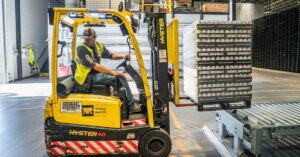
According to HSE statistics for Great Britain (2023/24), 1.7 million workers reported work-related ill health. Additionally, 604,000 workers self-reported non-fatal injuries, while RIDDOR recorded 138 fatal workplace accidents.
The cost of workplace injuries and illnesses to business is high (£21.6 billion annual cost to the British economy), with sick days slowing production and fines being distributed for poor health and safety processes.
Beyond these financial implications, poor health and safety processes can lead to decreased employee morale, damage to the company’s reputation, and potential legal consequences.
Key points:
- Your workplace will have its unique health and safety challenges to overcome, but there are common issues familiar to every business, small or large. We’ve detailed 17 of the most common below.
- By investing in exceptional health and safety training, the number of injuries will reduce, as well as the risk of litigation for your business.
TL;DR – Examples of Health and Safety in the Workplace
Here’s a quick rundown of practical examples that keep everyone safe and sound:
| Category | Examples |
| Physical Environment | Regular checks, good light, comfortable work areas, clear exit signs |
| Training | Regular safety talks, training for specific job risks, certification for dangerous tasks |
| Equipment | Proper protective gear, regular machine checks, safety features on equipment |
| Policies and Procedures | Clear safety plans, risk evaluations, and easy ways to report issues |
| Employee Engagement | Safety committees, nominated safety representatives, and recognition for good safety practices |
| Mental Health | Stress management programmes, fair workloads, employee support services |
TSW Training Support: If you’re looking for structured health and safety training, TSW Training offers IOSH Managing Safely and other courses to support compliance and improve workplace safety.
Why Health and Safety Is Crucial for Businesses
Why is health and safety important? Here are the key reasons investing in workplace safety and health is a must for you—it’s simply non-negotiable:
Financial Benefits
Investing in workplace safety isn’t just about compliance—it improves business performance. Under the Management of Health and Safety at Work Regulations 1999, employers must assess and control risks.
Businesses that take proactive safety measures benefit from reduced absenteeism, lower insurance costs, and improved productivity.
In accordance with these regulations, organisations implementing comprehensive health and safety management systems have seen significant financial returns.
The North Staffordshire Combined Healthcare NHS Trust, by complying with their legal obligations under the approved code of practice and guidance, reported a 16% reduction in incidence rates over 2 years and a 10% reduction in insurance premiums.
Even research beyond the UK supports these findings.
McKinsey Health Institute’s 2025 report shows that when companies invest in employee health, they can achieve significant returns.
For example, the sportswear company ‘On’ saw approximately £11.60 return for every pound spent on employee well-being initiatives (11.6x ROI annually).

Legal Compliance
Under the Health and Safety at Work Act 1974 and associated regulations, employers have a legal duty to ensure the health, safety, and welfare of their employees.
Non-compliance can result in:
- Improvement and prohibition notices
- Substantial fines (Under the Health and Safety at Work Act 1974, fines for breaches are unlimited. In 2024, several major UK businesses faced multimillion-pound fines, with some ranking among the largest in HSE enforcement history. The Sentencing Guidelines consider factors like harm risk and company turnover when determining penalties.)
- Criminal prosecution, including potential imprisonment for serious breaches (Section 37 of the Act allows for personal liability of directors and officers)
- Civil claims for compensation from affected employees and other parties
The Health and Safety Sentencing Guidelines implemented in 2016 dramatically increased the level of fines, with penalties now routinely reaching millions of pounds for large organisations found guilty of serious breaches.
Reputation Management
A company’s approach to health and safety significantly impacts its reputation among stakeholders:
- Employee Attraction and Retention: Sainsbury’s reported improved morale and pride in working for the company after revising their approach to health and safety in line with the Management of Health and Safety at Work Regulations 1999. Their implementation included board-level training and a clear vision, resulting in a 17% reduction in sickness absence and a 28% reduction in reportable incidents.
- Customer Confidence: Companies with strong safety records often gain competitive advantages when bidding for contracts.
- Community Relations: Serious workplace incidents can damage relationships with local communities, which may take years to rebuild.

Benefits of Health and Safety Training
If you invest in exceptional health and safety training, you’ll see benefits and progress almost instantly, curbing the number of people hurt on the job and therefore, the risk of litigation.
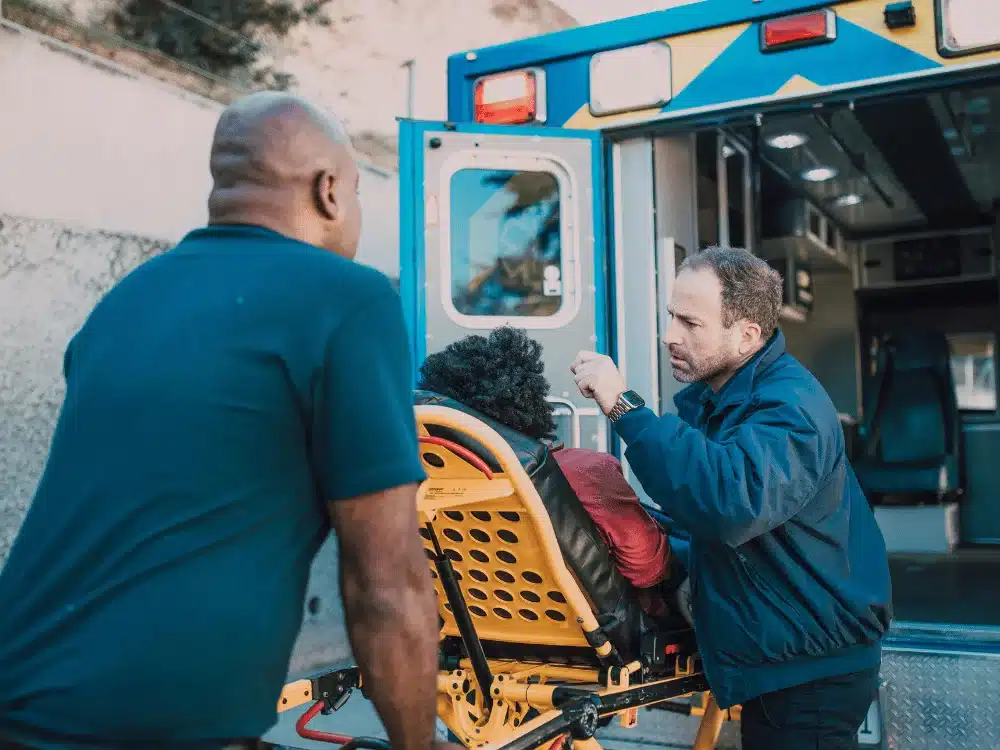
However careful you are, you can always count on the unexpected. Accidents, minor or serious, will happen. The right training doesn’t just show you how to prevent, it also shows you how to respond and react so they don’t happen again.
Common Examples of Hazards in the Workplace
Your own workplace will have its unique challenges to overcome, but there are health and safety issues familiar to every business, small or large:
- Temperature, light and air conditioning
- Harmful surroundings and hazardous substances, like asbestos
- Workstation health and safety, like computers and other display screen equipment (DSE)
- Manual handling
- Noise and sound exposure
- Slips, trips and falls
- Handling heavy machinery, tools and equipment
It could be these hazards, or something more specific to your company, that creates health and safety issues if they go unmanaged.

Health and Safety in the Workplace Examples
The following health and safety in the workplace examples demonstrate how UK organisations apply best practices across different environments.
Physical Environment Safety Examples
The physical workspace is where your employees spend most of their time, making it essential that these environments are designed with safety in mind.
From proper lighting to clear walkways, small changes to the physical environment can significantly reduce accident risks.
Office Settings
Think your office is automatically safe because there’s no heavy machinery? Think again.
Offices come with their own set of hazards that require thoughtful solutions:
- Ergonomic Workstations: Standing desks at Facebook that allow employees to alternate between sitting and standing positions
- Clear Walkways: Amazon’s colour-coded floor markings in warehouses to designate safe walking paths
- Proper Lighting: Phillips’ offices use natural light supplemented by adjustable task lighting to reduce eye strain
- Cable Management: Google’s under-desk cable trays to prevent tripping hazards
Manufacturing Settings
Manufacturing environments present more obvious dangers due to the nature of the work.
If you operate in this sector, consider how these companies have addressed common safety concerns:
- Machine Guarding: Toyota’s physical barriers that prevent access to moving machine parts
- Noise Control: 3M’s sound-dampening panels in high-noise areas and mandatory hearing protection
- Ventilation Systems: Chemical manufacturing plants use extraction systems to remove harmful fumes
- Emergency Shutdown Procedures: BP’s easily accessible emergency stop buttons throughout production facilities
Construction Settings
Construction sites are among the most hazardous workplaces, with risks coming from heights, moving vehicles, and changing environments.
Here’s how leading construction companies protect their workers:
- Scaffolding Safety: The London Olympics stadium construction used colour-coded tags to indicate daily-inspected scaffolding
- Fall Protection: Balfour Beatty’s comprehensive harness and lanyard systems for all work at heights above 2 metres
- Proper Material Storage: Segregated storage areas with clear weight limits and stability requirements
- Traffic Management: Separate pedestrian and vehicle routes with physical barriers on large construction sites

Examples of Health and Safety Training in the Workplace
Having the proper safety equipment is only half the battle—your employees need to know how to use it properly.
Training is your frontline defence against workplace accidents. Here’s how successful companies approach safety training:
- Induction Training: New employees at Rolls-Royce complete safety orientations before accessing workshop areas
- Task-Specific Training: Specialised training for operating particular machinery or handling hazardous substances
- Regular Refreshers: Mid and West Wales Fire and Rescue Service implemented a revised health and safety framework, which contributed to their 50% reduction in injury incidence rate over a 3-year period
- Emergency Response Drills: Regular fire and evacuation drills, with different scenarios to test preparedness
- Toolbox Talks: Brief, focused safety discussions at the beginning of shifts addressing specific daily risks
Why Training Matters: Health and safety training ensures that employees understand the risks associated with their workplace, the safe working practices required, and the emergency response procedures in place. It is a legal requirement under several regulations, including:
- Management of Health and Safety at Work Regulations 1999 (general safety training)
- Manual Handling Operations Regulations 1992 (manual handling training)
- Display Screen Equipment Regulations 1992 (DSE workstation training)

Equipment and PPE Examples
Personal Protective Equipment (PPE) serves as your employees’ last line of defence against workplace hazards.
When engineering controls and safer work practices aren’t enough, the correct PPE can make all the difference.
Here’s how various industries approach PPE:
- Appropriate PPE Provision: Construction sites providing task-specific PPE (hard hats, high-visibility clothing, safety boots)
- Respiratory Protection: 3M’s respiration equipment fitting programmes ensure proper seal and protection
- Eye Protection: Task-specific eyewear ranging from basic safety glasses to full-face shields for different operations
- Hearing Protection: Noise-cancelling headphones in manufacturing environments
- Hand Protection: Cut-resistant gloves in food processing facilities
Communication and Signage Examples
Clear communication about hazards is essential; your employees can’t avoid risks they are unaware of.
Adequate signage and communication systems help everyone stay informed about potential dangers:
- Hazard Signage: Standardised warning signs using universally recognised symbols
- Emergency Information: Clearly displayed evacuation routes and assembly points
- Safety Dashboards: Digital displays showing real-time safety statistics and goals
- Multilingual Information: Safety instructions in all languages used by the workforce
- Visual Management: Colour-coded systems to indicate hazard levels or safety compliance

Examples of Health and Safety Procedures
Having well-defined procedures ensures that safety isn’t left to chance.
When your team knows exactly what steps to follow, they’re much less likely to take dangerous shortcuts.
Here are some procedural approaches that have proven effective:
- Risk Assessments: British Sugar conducts comprehensive risk assessments for all operations, with risks ranked by importance before developing control measures.
- Permit-to-Work Systems: For high-risk activities such as hot work, confined space entry, or electrical work
- Lock Out/Tag Out Procedures: Systems ensuring machinery is fully powered down during maintenance
- Safe Operating Procedures: Step-by-step instructions for operating equipment safely
- Incident Reporting: Near-miss reporting systems that identify potential hazards before accidents occur
Mental Health and Safety Examples in the Workplace
Today’s workplace safety extends beyond physical hazards to include mental well-being. Stress and mental health issues can lead to accidents just as surely as physical hazards.
Here’s how forward-thinking companies are addressing these concerns:
- Workload Management: Setting reasonable deadlines and ensuring adequate staffing levels
- Flexible Working: Options for remote work or flexible hours to support work-life balance
- Breakout Spaces: Dedicated areas for rest and relaxation during the workday
- Mental Health First Aiders: Trained staff who can provide initial support for colleagues experiencing mental health issues
- Employee Assistance Programmes: Confidential counselling services offered through employers

17 Signs Your Business Needs Health and Safety Training
Is your workplace showing signs that it needs better safety training? Just as your car gives warning signals before breaking down, your business may be showing red flags that safety isn’t quite right.
These warning signs typically appear before anything serious happens, allowing you to address problems before someone gets hurt.
There can be more accidents happening around the office, or people may not be discussing safety issues. Even minor accidents or near-misses can be signs of things to come!
Let’s look at the key signs that tell you it’s time to invest in proper health and safety training for your team:
#1. A high rate of work-related injuries
Self-reported, non-fatal workplace injuries reached 441,000 in 2020/21.
Some accidents are familiar to every workplace, whether your staff operate a crane or sit at a desk for most of the day.
Here are the most common workplace dangers, according to the HSE, reported across all industries.
- Slips, trips and falls on one level: 33%
- Handling, lifting or carrying: 18%
- Struck by a moving object: 10%
- Violence: 8%
- Fall from a height: 8%
Your health and safety objectives should focus on eliminating the most common workplace injuries.

#2. There are life-threatening risks at work
Unfortunately, there have been many cases in which people have lost their lives at work. And for this reason alone, health and safety must be taken seriously.
If there are life-threatening health and safety risks at work, you must submit a RIDDOR report if a member of your staff gets injured and they:
- Die
- Break a bone, except thumbs, fingers and toes
- Need amputation
- Lose their sight
- Suffer a crush injury to the head or torso with damage to the brain and internal organs
- Sustain a severe burn that covers more than 10% of the body, or damages the eyes, respiratory system and internal organs
- Lose consciousness after a head injury or asphyxia
- Need resuscitation
- Get hypothermia
*You must make sure that accidents are correctly recorded, and you must report an injury at work if it causes your employee to take more than seven consecutive days of sick leave.
If your employee’s injured, but it doesn’t fall into a RIDDOR report category, you must still make a record of it. You must maintain an accident book in accordance with the Social Security (Claims and Payments) Regulations, 1979.
If you follow health and safety legislation carefully, you’ll sidestep legal action and compensation claims, assuring the future of your business and the well-being of your staff.
Quality health and safety training, like the IOSH Managing Safely or NEBOSH General Certificate, will show you how to safely handle accidents and control hazards, however dangerous they are.
*There will be an increased number of accidents in the workplace following any kind of health and safety training, but it’s a positive trend.
It shows that the learning has transferred and that your staff are accurately reporting the accidents, hazards, and risks they encounter, which were previously uncontrolled.
#3. Work-related ill health is common
Work-related ill health kept 1.7 million people off work in 2020/21, and half of those were suffering from stress and anxiety at work, or depression.
As the saying goes, ‘prevention is better than cure’.
If you send your staff on the IOSH Managing Safely course, they’ll learn how to identify hazards that contribute to anxiety and other conditions, including musculoskeletal injuries.
They’ll have the initiative to identify and control hazards that contribute to a high level of work-related ill health and absence.
#4. You work with harmful substances
The HSE estimates there will be 2,500 mesothelioma (cancer) deaths every year until the end of the decade, linked to exposure to harmful substances at work.
It’s not hopeless – if you work with harmful substances and fumes, you can take steps to protect your staff.
Health and safety training that contains risk assessment training (both IOSH and NEBOSH do), will show your staff how to reasonably predict foreseeable risks, like occupational asthma, lung disease and mesothelioma.
All good health and safety training courses will walk through risk controls that can be dropped into working environments to safeguard against harmful substances that could cause respiratory conditions:
- Is there physical signage alerting staff to the substance and instructing them how to behave?
- Are health and safety procedures placed on the surfaces around the substance?
- What equipment and machinery could be used to reduce the risk?
- Is there a less hazardous substance that could be substituted?
- Could engineering solutions be employed to contain fumes?
- Are staff wearing enough protective clothing (PPE)? For example, masks, goggles, gloves, and hazmat suits
Identifying opportunities to outsource to a specialist is another outcome of successful health and safety training. For instance, which chemicals and pollutants could be very harmful to your staff?

#5. The accident book is full of manual handling injuries
In 2021, there were 470,000 reported cases of work-related musculoskeletal disorders.
If a member of your staff has a musculoskeletal disorder, they have a medical condition that affects their bones, joints, and muscles, preventing them from working.
Musculoskeletal disorders should be on your radar if your team are involved with manual handling. You can prevent hazardous manual handling by reviewing your processes and operations to ensure you’re controlling how much of your stock needs to be moved manually.
Your staff must learn how to complete a risk assessment to determine the likelihood and potential harm of a hazard.
They’ll have to ‘describe the harm‘ by assessing the severity of the hazard and determining how likely someone would be to get hurt or die if it were left as it is.
Manual handling risk assessment example
A warehouse operative is lifting large boxes from a pallet and onto the warehouse floor.
Your risk assessment must evaluate and describe how the hazard could injure them, including the implications if they’re hurt immediately, the long-term considerations, and whether the injury could be life-threatening.
Immediate musculoskeletal injuries as a result of manual handling could be bone fractures, pulled muscles and bruises. They might need bed rest, physiotherapy and numerous appointments with doctors and healthcare professionals.
The long-term implications could include torn ligaments and tendons, which require specialist therapy and treatment that extends beyond a few days off and occasional appointments.
By assessing the risks associated with manual handling, recording and taking steps to control them, you’re:
- Limiting the risk of manual handling injuries
- Reducing the likelihood and cost of sick leave
#6. Cases of workplace stress, anxiety and depression are increasing
822,000 workers reported feeling stressed, depressed, or anxious. The impact is being seen in workplaces across the country.
If you can improve workplace mental health and wellbeing, you could prevent work-related absence and keep your workforce happy.
In 2020/21, there were 451,000 new cases of work-related stress, depression, and anxiety – an increase of 104,000 on the previous year.
A health and safety manager’s mental state is so important because their reporting may not be accurate if they’re feeling under pressure. As a result, you won’t have peace of mind that the business is protected.
Build knowledge and understanding with courses like IOSH Managing Safely to build an open health and safety culture where everyone is accountable for the well-being of their colleagues and the wider business.
With all eyes open to hazards and a solid reporting process in place, you’ll alleviate the stress felt by health and safety managers.
#7. You’re slow to find and apply protective measures
If a member of your staff loses their life at work due to your health and safety negligence, it could call time on your trading. The industries with the highest number of annual fatalities in 2020/21 were:
Industry and the number of yearly fatalities
- Construction: 30
- Agriculture, forestry and fishing: 22
- Manufacturing: 22
- Transportation and storage: 16
- Wholesale, retail, motor repair; Accommodation and food: 11
- Administration and support services: 12
Health and safety training helps your team spot and control life-ending hazards, for instance:
- Falling from a height
- Being struck by a moving vehicle or object
- Contact with moving machinery
- Being trapped by something collapsing or overturning
During risk assessment training, your staff will use the 5×5 risk matrix and learn how to assess the danger posed by an untreated risk.
They’ll work out an inherent risk score by multiplying the likelihood score and a consequence score.
If the IOSH (5×5) risk calculator assigns a high score to a hazard, you must take immediate action to control it and ultimately, save lives.
For example, if the likelihood score was five (5) – very likely – and the consequence score was five (5) – catastrophic, deadly – the inherent risk rating would be 25.
Likelihood scores
| Score | Description |
| 1 | Very unlikely |
| 2 | Unlikely |
| 3 | Fairly likely |
| 4 | Likely |
| 5 | Very likely |
Consequence scores
| Score | Description |
| 1 | Insignificant, no injury |
| 2 | Minor, but needs first aid |
| 3 | Moderate, three days absence |
| 4 | Major, more than seven days of absence |
| 5 | Catastrophic, death |
If an employee dies at work, you must report it to the police and HSE, even if your employee is working away from your workplace.
#8. You’re worried about prosecution, fines and sentencing
The HSE issued £26.9m in fines for health and safety offences in 2020/21.
If your health and safety staff and the wider organisation comply with the Health and Safety at Work Act 1974, you’re not at risk of prosecution.
However, the Management of Health and Safety at Work Regulations 1999 require you to keep your staff’s health and safety skills up to date. Regular, recognised training is a way to do this.
The IOSH Managing Safely qualification is regulated by IOSH, a widely respected and well-known chartered body. Similarly, the NEBOSH General Certificate is regulated and maintained by the awarding examination board NEBOSH, which is known worldwide for its exceptional standards.
Once they qualify, it never expires. However, to comply with the 1999 regulations, you can send your team on refresher courses every three years or move them onto further health and safety education.
Both IOSH and NEBOSH have an education framework, designed to keep health and safety workers informed about the changing landscape of their industry and deepen their knowledge.
If your company turns a blind eye to hazards and deals with accidents as they happen, that’s not a safe situation for you or your business to be in.
Quickly get control of a high-risk environment by challenging lazy habits and tired processes head-on.

#9. There’s no visibility across the business
You’re not involved with all areas of the business, so there are hazards you can’t see in rooms you never go into.
That’s a dangerous position for a health and safety manager to be in; you need to have a thorough knowledge of your workplace, so you can accurately describe it and clearly discuss hazards and apply controls in a risk assessment.
Health and safety training helps you to routinely notice the function and size of the space, as well as how many people use it. You’ll schedule timely, formal inspections, and you’re alert for hazards throughout the day.
#10. There’s no trust that processes are being followed
You need to be in a position where the health and safety processes guide the actions of your staff, even if you’re not there to supervise.
Health and safety training will teach you that even in a high-risk workplace, not every employee will encounter every hazard; however, there must be rules and policies in place to guide them if they do.
You need to be aware of which job roles are exposed to various risks, such as when visitors access the space near the hazard, and if anyone accesses the area at different times of day, for instance, shift workers, cleaners, and maintenance staff.
#11. There is no communication about hazards
“If hazards aren’t identified or reported by employees, it is near impossible to keep a busy workplace safe. This puts significant pressure on those responsible for health and safety, and presents some serious risks for the organisation and its people,” explains our commercial director, Matthew Channell.
Showing employees how to tackle a hazard when they find it will encourage the whole organisation to work together to improve workplace safety, rather than overstretching health and safety managers.

#12. You don’t know who is responsible for health and safety
When accidents happen, it’s anyone’s guess who’s going to sort out the hazard. Reporting health and safety issues fails at the first hurdle. You might find that:
- Dangerous hazards which need urgent attention aren’t dealt with quickly enough
- Superfluous or extreme controls are applied to trivial hazards
“Team leaders, supervisors, and managers not understanding their legal duties and responsibilities for health and safety creates dangerous situations and risk of litigation,
“If there’s a lack of collective responsibility, health and safety managers often feel like they are in a party of one, and that’s a lonely, frustrating place to be. In my experience, health and safety professionals would like a few more allies in their fight to develop safety-first cultures.
“IOSH courses for example, can improve buy-in through a better understanding of importance and roles. Once every person understands they have a responsibility for health and safety, regardless of role, we will be in a better place.” – Matthew Channell, Commercial Director
You need to learn how to assign a score to a hazard, as shown in the 5×5 risk matrix above, so you can accurately describe how likely an accident is and how severe the consequences would be if you did nothing.
Then, you can apply controls, re-score, and recommend how to appropriately manage the hazard and the date by which it needs to be resolved. You can also assign the task of controlling the risk to a specific person, so you’re reducing the chance of it causing trouble again.
#13. Not all injuries are taken seriously
You need to be aware of the circumstances surrounding every injury, no matter how minor, and learn how to assess the severity of the hazard. If you didn’t control a hazard, would it hurt your staff so much that they’d need ongoing treatment? Could it end their life?
A tiny scratch could lead to blood poisoning and sepsis, for instance, but it’s up to you to decide how likely that is.
With IOSH’s training, you’ll help your business reduce staff sick days by decreasing the risk of injury-related absence as well.
#14. You’ve been told to save money
Health and safety can improve and protect your business income and financial security.
By reducing the risk of liability and investing in health and safety controls that make the workplace safer in the long term, you’re preventing unnecessary spending.
The IOSH Managing Safely course and NEBOSH General Certificate training will show you how to identify, record and report hazards across your entire business and measure how successful the controls are. When you return to work, you’ll be able to prove that your approach to health and safety is saving the business money.
#15. You don’t have any accidents at work
Or, are they just not recorded? Turning a blind eye to accidents and hazards is irresponsible. You could face legal action, compensation claims, and place your staff and business in serious jeopardy.
In the months after your training, your senior managers might be alarmed by a sudden spike in the number of accidents in the workplace – this is evidence that you’ve learnt to document the accidents going unnoticed accurately. It’s a good thing.
The spike is a true reflection of the number of accidents that are taking place and the amount of work that needs to be done to control them.
#16. There’s no budget for health and safety training
Training is a soft risk control that raises health and safety awareness throughout the business. If everyone is vigilant for hazards and knows how to report them correctly, the health and safety culture should improve.
Health and safety often come at a cost, but it’s a necessary one. If your workers attend the IOSH Managing Safely course, your financial officers will gain a better understanding of the value that health and safety bring.
IOSH is unusual in that its qualifications don’t expire, but there are refreshers designed to bring you up to speed on new legislation and health and safety changes. It is vital to factor your top-up training into the budget.
Once you’re qualified, you must keep your skills sharp to prove you’re fulfilling your role with appropriate care.
#17. “Health and safety is boring”
“Health and safety, unfortunately, has a boring reputation,” says Matthew Channell, Commercial Director.
It’s challenging to get your people invested and caring about something they find tedious and unchanging.
However, if they feel like they’re making a positive difference, it encourages a caring and safe culture, making the environment safer for everyone.

Best Practices for Implementing Health and Safety Measures
You’ve seen how health and safety measures work in different workplaces, but how do you make them work for you?
Leadership Commitment: Demonstrate that safety is a top priority
Your team looks to you for cues on what’s important. If you make safety a priority, they will, too. This means allocating time and resources to safety initiatives and setting a good example.
For instance, if you’re in a meeting and a safety concern arises, don’t brush it aside—address it immediately.
British Sugar made safety a board-level priority, and it paid off with a 60% fall in injuries and a 75% drop in RIDDOR (Reporting of Injuries, Diseases and Dangerous Occurrences Regulations) accidents!
Systems Approach: Establish a Safety Routine
Think of safety as a cycle: plan, do, check, and adjust. This involves regularly assessing risks, implementing controls, and reviewing what works (and what doesn’t).
Keep records of everything, including office risk assessments, training, and incidents, so you can track progress. It’s a safety checklist that evolves with your workplace.
Employee Engagement
Get everyone involved. Safety isn’t just a top-down thing—it’s a team effort. When staff help shape safety practices, they gain a better understanding of their employees’ responsibilities for health and safety and feel more invested in following them.
Establish safety committees where team members can express concerns and propose improvements. You could also appoint representatives to maintain ongoing safety communication.
The success of this approach was evidenced during the construction of the London 2012 Olympics venues, where zero fatalities occurred, with positive employee engagement cited as a key contributing factor.
Technology and Innovation
Use tech to stay ahead. Modern tools can make safety easier. Wearable devices can alert you to environmental hazards, and emergency apps can simplify the reporting of hazards. Virtual reality can even let your team practice high-risk tasks safely.
It’s all about leveraging existing resources to foster a positive health and safety culture and stay one step ahead in your workplace.
Continuous Improvement
Always aim higher. Safety isn’t a one-time thing; it’s an ongoing process.
Instead of just reacting to incidents, focus on the principles of prevention. Compare your safety stats to industry standards and learn from any near misses. Share what you learn with others in your field. It’s about getting better every day, not just meeting the minimum.
Frequently Asked Questions (FAQs)
Let’s address some common questions about workplace health and safety:
Who Is Responsible for Health and Safety in the Workplace?
Health and safety is a collective effort, and figuring out who’s responsible for workplace health and safety is key:
- Employers have the primary legal duty to ensure the health, safety and welfare of employees and others.
- Managers must implement safety systems and ensure compliance with procedures.
- Employees have a duty to take reasonable care of their own safety and that of others and to cooperate with safety measures.
- Health and Safety Representatives support worker consultation and engagement.
- Health and Safety Professionals provide specialist advice and support.
What Law Regulates Health and Safety in the Workplace
In the UK, the principal legislation is the Health and Safety at Work Act 1974, supplemented by regulations including:
- Management of Health and Safety at Work Regulations 1999
- Workplace (Health, Safety and Welfare) Regulations 1992
- Personal Protective Equipment at Work Regulations 2022
- Manual Handling Operations Regulations 1992
Industry-specific regulations also apply, such as the Construction (Design and Management) Regulations 2015 for construction work.
How Often Should Workplace Safety Training Be Conducted?
Training frequency should be based on:
- Initial Training: All new employees, as well as when new equipment or processes are introduced.
- Refresher Training: At least annually for general safety awareness.
- Specialised Training: According to industry standards and regulatory requirements, this is typically conducted every 1-3 years.
- Following Incidents: When investigations reveal knowledge gaps or procedure failures.
- When Regulations Change: To ensure compliance with updated requirements.
IOSH does not formally mandate a specific refresher frequency.
Instead, they recommend that organisations determine their refresher training needs based on risk assessments, workplace changes, and incident data, even though qualifications like IOSH Managing Safely never expire.
Can Health and Safety Examples Vary by Industry?
Absolutely. While core principles remain consistent, implementation varies significantly:
- Construction: Focus on working at height, moving vehicles, and structural stability.
- Healthcare: Emphasis on infection control, patient handlin,g and sharps safety.
- Manufacturing: Concentration on machinery safety, noise, and chemical exposure.
- Office Environments: Attention to ergonomics, fire safety, and stress management.
- Hospitality: Priority on food safety, slip prevention and manual handling.
Industry-specific health and safety standards are also there to address these differences, such as COSHH for chemical hazards and CDM for construction.
What Are Some Common Health and Safety examples in the Workplace?
You could include ergonomic desk setups, PPE provision, signage, mental health programmes, and employee training—all tailored to the risks of your environment.
Conclusion
Workplace safety isn’t optional; it’s a legal duty. Ignoring health and safety risks can lead to accidents, legal penalties, and reputational damage.
Employers should implement robust safety policies, conduct thorough risk assessments, and provide comprehensive training programs to ensure compliance and protect their workers.
Need Training Support? Many businesses opt for external training providers to help meet their compliance requirements. TSW Training provides customised courses to assist companies in meeting their legal obligations and cultivating a robust safety culture.
Contact us to find the right training for your team.