Creating a health and safety policy isn’t just about compliance—it’s about protecting your people and your business.
According to the Health and Safety Executive (HSE), each non-fatal workplace injury costs businesses an average of £11,700 in lost productivity, compensation, and other expenses.
For businesses with five or more employees, having a written health and safety policy isn’t just a smart move—it’s a legal requirement.
In this guide, you’ll find everything you need to create a comprehensive health and safety policy, including a free downloadable health and safety policy template (and guidance) to simplify the process.
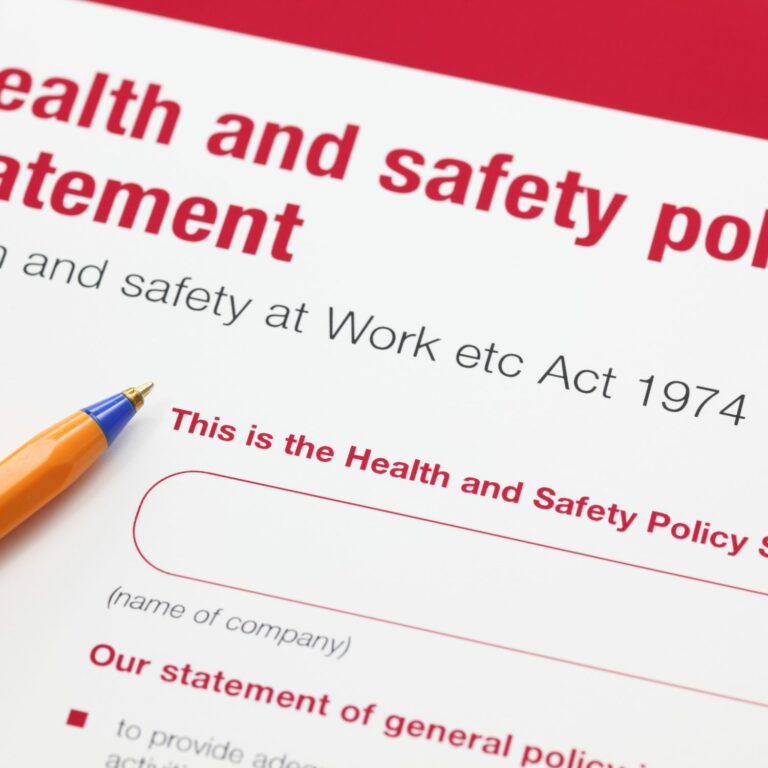
With this tool, you’ll be able to craft a clear statement of intent, define roles and responsibilities, and outline key safety measures for your organisation.
Ready to take the first step in safeguarding your workplace? Let’s dive into the essentials of writing a health and safety policy.
Key Points (TLDR)
- Legal Requirement: Every business with five or more employees must have a written health and safety policy.
- Tailored to Your Business: Your policy should reflect your company’s specific operations, challenges, and risks.
- Choose the Right Author: The best person to write the policy is someone who deeply understands your business and its unique needs.
- Comprehensive Structure: A strong health and safety policy includes a Statement of Intent, Responsibilities, and Arrangements.
- Proactive Risk Management: Conduct thorough risk assessments to identify hazards, reduce risks, and meet legal obligations.
- Stakeholder Accountability: Your policy demonstrates compliance and reassures clients, employees, and regulators of your commitment to safety.
- Free Template Available: Use our free health and safety policy template to streamline the process and ensure nothing is overlooked.

What is the Health and Safety Policy?
A health and safety policy is a formal document that outlines your organisation’s general approach to managing health and safety risks.
It serves as a roadmap for ensuring the wellbeing of employees, visitors, and anyone affected by your workplace activities.
The Health and Safety Executive (HSE) defines a health and safety policy as a statement explaining who is responsible for what, when actions will be taken, and how these measures will be carried out.
At its core, a health and safety policy demonstrates your commitment to creating a safe working environment.
Having a documented health and safety policy is not just a box-ticking exercise; it’s a vital management tool that will help guide your activity in identifying potential hazards, implementing preventive measures, and ensuring compliance with legal obligations.
Definition and Purpose
A Health and Safety Policy is a cornerstone document that outlines an organisation’s unwavering commitment to managing health and safety within the workplace.
Its primary purpose is to ensure that the environment is both safe and healthy for all employees, visitors, and contractors.
This policy sets forth the organisation’s strategic approach to managing health and safety risks, detailing the responsibilities of employees, managers, and supervisors in maintaining a healthy and safe workplace.
By clearly defining these roles and responsibilities, the policy helps to foster a culture of safety and accountability, ensuring that everyone understands their part in creating a secure working environment.
Who Must Have a Health and Safety Policy by Law?
For businesses with more than five employees, having a written health and safety policy isn’t optional—it’s a legal requirement under the Health and Safety at Work Act 1974.
There is no obligation to write a policy for those businesses with fewer than five employees. However, these businesses are advised to do so.
Importance of Having a Workplace Health and Safety Policy
Under Section 2 of the Health and Safety at Work Act 1974, all employers must provide a safe working environment for employees, visitors, customers, and clients.
However, alongside the legal implications of non-compliance and the financial cost of absenteeism, there are many compelling reasons for businesses to have a safety and health policy.
- Reduce workplace incidents: Health and safety policies highlight safe working practices for staff in all areas of the business.
- Greater risk awareness: The risk of slips and trips is present in every business, but employee awareness can rise as much as 62% when these risks are discussed as part of company safety plans.
- Improve staff morale: Making employees aware of the health and safety policy and involving them in decision-making can help stimulate a positive health and safety culture in your business.
- Improve efficiency: Safe staff aren’t just happy. A study by Oxford University found that happy workers are also 13% more productive.
- Better reputation: Nobody wants to work or conduct business with a company that does not value the safety of its workers.
While all the above elements help outline that employees also have health and safety responsibilities, it’s worth remembering that business owners remain liable for instances of non-compliance.
For example, technology giant Dyson was fined over £1.2 million when health and safety failures at its Wiltshire factory resulted in an employee suffering serious injuries after being hit by a 1.5-tonne milling machine.
What Should Be in Your Health and Safety Policy?
An effective health and safety policy should be well-structured and easy to understand, typically comprising three essential sections:

Section 1: Statement of Intent
This is your organisation’s declaration of commitment to maintaining a safe and healthy work environment. It should clearly state your health and safety management goals and pledge to comply with relevant legal requirements. For added impact, include a signature from a senior leader to demonstrate top-level support.
Section 2: Responsibilities
Clearly outline who implements and maintains health and safety standards across your organisation. It is crucial to detail the individuals with specific responsibility for health and safety within the policy.
This section should ensure everyone understands their role in fostering a safe workplace. While ultimate responsibility lies with employers, tasks should be delegated to specific roles. For example:
- Health and Safety Managers: Oversee overall compliance and ensure procedures are followed.
- Line Managers and Team Leaders: Monitor day-to-day safety practices within their teams and report incidents.
- Employees: Play a role by adhering to safety protocols and reporting hazards.
Section 3: Arrangements
Your arrangements are like your set of safety rules that should be tailored to your specific business environment and clearly communicated to all employees, ensuring accountability and understanding of responsibilities related to health and safety.
In this section, you will need to detail your plans and procedures for managing health and safety in a manner that satisfies your statement of intent. Your arrangements section should include things like:
- Risk Assessments: How you will identify, evaluate, and mitigate workplace risks through effective risk assessment. This includes how and when you will review your risk assessments. Completed by competent individuals, risk assessments should highlight any hazards and risks around your premises.
- Training Programs: Your approach to equipping employees with the knowledge of their health and safety responsibilities.
- Emergency Protocols: Procedures for handling accidents, fires, or other emergencies.
- Incident Reporting: Steps for recording and investigating accidents or near-misses.
- Regular audits: Detail your commitment to reviewing your policy regularly and in light of changes in your business that warrant review or incidents/accidents.
- Reporting lines: As a side note to the above responsibilities, employees should also report any incidents or near misses to their manager. Managers should then see that these are fed back under the RIDDOR 2013 regulations.
A well-crafted health and safety policy does more than fulfil legal obligations—it sets the foundation for a proactive safety culture, reduces risks, and enhances your organisation’s credibility.
Let’s explore how you can write your policy using our free H&S policy template as a guide.
Health and Safety Policy Template and Writing Guide
Your health and safety policy will be unique to your business, but following these instructions will ensure a watertight and lawful health and safety policy.
1. The ‘Statement of Intent’ Section
When writing your statement, state your main objectives. Follow this six-step template to start your health and safety policy.
What is a Health and Safety Policy Statement of Intent?
A Health and Safety Policy Statement of Intent declares your company’s commitment to keeping your workplace safe and healthy. It sets out your goals, shows how you’ll meet them, and reassures everyone—staff, clients, and visitors—that safety is a top priority.
This statement is more than a formal requirement; it’s your chance to show leadership and inspire confidence. A well-crafted statement demonstrates that health and safety are at the heart of your business. It’s often the first document people see, so make it count.
Your statement of intent should:
- Clearly state your commitment to health and safety.
- Outline your goals, like reducing accidents or creating a culture of safety.
- Show how you’ll meet legal requirements and industry standards.
- Be signed by senior management to highlight accountability.
While looking at other examples for inspiration, avoid copying and pasting. Your statement should reflect your company’s values, culture, and unique approach to safety. Personalising it shows authenticity and builds trust.
Keep it simple, direct, and impactful. This isn’t just a document; it’s your promise to protect your people and uphold your company’s reputation.
How to Write the Policy Statement of Intent
Crafting a comprehensive Health and Safety Policy Statement of Intent is crucial for demonstrating your organisation’s commitment to a safe workplace. Here’s how to write an effective statement:
Affirm Compliance with the Health and Safety at Work Act 1974
Clearly state your organisation’s dedication to adhering to the Health and Safety at Work Act 1974, emphasising the general duty under Section 2(1) and the specific duties outlined in Section 2(2).
This underscores your commitment to ensuring the health, safety, and welfare of all employees.
Emphasise Equal Importance of Legal, Moral, and Financial Responsibilities
Highlight that your organisation places equal importance on legal compliance, moral obligations to protect employees, and the financial benefits of maintaining a safe workplace.
This balanced approach demonstrates a holistic commitment to health and safety.
Encourage Employee Participation
Acknowledge that while employers hold primary responsibility for health and safety, active cooperation from all employees is essential. Encourage staff to engage in safety practices, report hazards, and contribute to a culture of safety.
Outline Review and Monitoring Procedures
Specify the criteria and frequency for reviewing the health and safety policy to ensure its ongoing relevance and effectiveness. Detail the processes for monitoring compliance and implementing necessary updates.
Obtain Endorsement from Senior Leadership
Ensure the statement is signed and dated by the highest-ranking individual in the organisation. This visible endorsement reinforces top-level commitment and accountability.
Communicating the Policy
After finalising the statement, it is vital to inform all staff of its existence and location. To ensure widespread awareness, display copies on noticeboards, discuss them during meetings, and include them in new employee inductions.
Regular Review
Remember, the Statement of Intent is a dynamic document. It should be regularly reviewed and updated to reflect any changes in operations, legislation, or organisational structure, ensuring it remains pertinent and effective.
Following these steps demonstrates a proactive approach to health and safety, fostering a safer and more responsible workplace.

2. The ‘Responsibilities’ Section (Aka Organisation Chart)
The Responsibilities section of your Health and Safety Policy delineates the specific roles and duties related to maintaining a safe workplace.
A well-structured organisational chart can effectively illustrate the hierarchy of health and safety responsibilities within your company.
How to Write the Responsibilities Section
There are some key elements to consider in your responsibilities section. They include:
Clear Identification of Roles:
Specify individuals or job titles responsible for health and safety tasks. Including names can enhance accountability, as people are more likely to take their duties seriously when explicitly assigned.
Alternatively, listing job titles ensures that responsibilities are tied to positions, maintaining clarity even when personnel change. The organisational chart should be regularly updated to reflect any changes in roles or personnel.
Detailed Responsibilities:
Outline specific duties for each role, ensuring that everyone understands their obligations. This clarity helps prevent overlaps and gaps in safety management.
For example, define who is responsible for conducting risk assessments, implementing safety protocols, and reporting incidents.
Visual Representation:
Utilise an organisational chart to visually map out the structure of health and safety responsibilities. Including photographs of individuals can personalise the chart, fostering a sense of ownership and commitment.
The chart should depict the chain of command and communication pathways, ensuring all employees know whom to approach regarding safety concerns.
Best Practices:
Regular Reviews:
Periodically assess and update the organisational chart and responsibilities to remain relevant and effective.
This practice is crucial, especially when there are changes in personnel or organisational structure.
Communication:
Ensure that all employees know the structure of health and safety responsibilities.
Display the organisational chart prominently in common areas and include it in training materials and employee handbooks.
Training and Support:
Provide adequate training and resources to individuals assigned specific health and safety roles. This support enables them to fulfil their responsibilities effectively and fosters a culture of safety within the organisation.
By clearly defining and visually representing health and safety responsibilities, your organisation can promote accountability, streamline communication, and enhance overall workplace safety.
3. The ‘Arrangements’ Section
The Arrangements section of your Health and Safety Policy outlines the specific measures your organisation will implement to fulfil the commitments stated in your Statement of Intent.
This section is a practical guide detailing how you will manage health and safety within your workplace.
How to Write the Arrangements Section
Key Components to Include:
Risk Assessments:
Describe your process for identifying workplace hazards, evaluating associated risks, and implementing control measures to mitigate them. Regular risk assessments are essential to proactively manage potential dangers.
Training Programs:
Detail the health and safety training provided to employees, including induction sessions for new hires and ongoing training for existing staff. Emphasise the importance of equipping employees with the knowledge and skills necessary to work safely.
Emergency Procedures:
Outline the protocols for responding to emergencies such as fires, chemical spills, or medical incidents. Include information on evacuation routes, assembly points, and the roles and responsibilities of staff during emergencies.
Accident Reporting and Investigation:
Explain the procedures for reporting workplace accidents, near misses, and hazardous conditions. Detail how incidents will be investigated and the steps taken to prevent recurrence.
Health Surveillance:
If applicable, describe any health monitoring programs to detect early signs of work-related ill health among employees.
Maintenance of Equipment:
Specify the arrangements for the regular inspection, maintenance, and testing of workplace equipment to ensure it remains safe to use.
Consultation with Employees:
Detail how your organisation will engage with employees on health and safety matters, including the mechanisms for consultation and communication.
Best Practices:
Tailor to Your Organisation:
Ensure that the arrangements reflect the specific operations and risks of your workplace. Generic statements should be avoided in favour of detailed, relevant procedures.
Regular Review:
Commit to reviewing and updating the Arrangements section periodically, especially when there are significant changes in workplace processes, equipment, or personnel.
Documentation and Accessibility:
Maintain clear records of all health and safety procedures and ensure they are easily accessible to all employees.
By comprehensively detailing your health and safety arrangements, you provide a clear roadmap for maintaining a safe working environment, thereby reinforcing your organisation’s commitment to the well-being of all employees.
Risk Assessments (Crucial to Arrangements)
Conducting thorough risk assessments is fundamental to developing effective health and safety arrangements.
This process involves systematically identifying potential hazards in your workplace, evaluating the associated risks, and implementing control measures to mitigate them.
Steps to Conduct a Risk Assessment:
- Identify Hazards: Examine your workplace to determine what could cause harm. This includes considering routine operations, non-routine activities, and potential emergencies.
- Determine Who Might Be Harmed and How: Consider how each hazard might affect employees, contractors, visitors, and others.
- Evaluate Risks and Decide on Precautions: Assess the likelihood and severity of harm from each hazard. Implement appropriate control measures following the hierarchy of controls: elimination, substitution, engineering controls, administrative controls, and personal protective equipment.
- Record Your Findings and Implement Them: Document the hazards identified, the associated risks, and the measures taken to control them. Ensure that these controls are effectively implemented.
- Review and Update the Assessment: To ensure they remain current and effective, regularly revisit your risk assessments, especially when workplace changes occur.
For more on conducting your risk assessments, see our comprehensive guide.
Individuals conducting risk assessments must be competent and possess the knowledge, experience, and training to identify hazards and implement effective controls.
This competence ensures the risk assessment is suitable and sufficient, providing a solid foundation for your health and safety arrangements.
By systematically conducting risk assessments, you can develop targeted arrangements to effectively manage workplace hazards and ensure the safety and well-being of all stakeholders.

Who Should Write the Health and Safety Policy?
The right person to write your health and safety policy is someone who understands both your business operations and health and safety principles. This combination of knowledge ensures the policy is practical, relevant, and effective.
If the policy writer lacks insight into how the business operates, the document may miss critical details and fail to serve its purpose.
Before assigning this responsibility, ask the following four questions:
- Do they know the purpose of the business?
A clear understanding of the company’s mission and goals is essential. - Do they understand what’s best for the business?
The policy writer must align health and safety practices with operational needs and objectives. - Do they know the business’s capabilities?
Ensuring the proposed health and safety measures are achievable within the business’s resources is crucial. - Do they grasp the challenges the business faces?
Awareness of potential risks and obstacles allows for a policy that addresses real-world issues.
If the individual can confidently answer “yes” to these questions, they are well-suited to create the policy.
A well-crafted health and safety policy does more than meet legal requirements. It demonstrates professionalism, instils confidence in clients, and sharpens your team’s focus.
Invest the time it deserves, as the rewards (compliance, productivity, and business growth) are substantial.

What Happens If You Don’t Have a Health and Safety Policy
Failure to have a health and safety policy is a breach of the law, exposing your business to serious consequences.
If your business is growing, such as when increasing staff from fewer than five to more, it’s a legal requirement to have a written health and safety policy in place. Waiting until after growth exposes your business to unnecessary risks, as any incident could highlight non-compliance and lead to severe repercussions.
The Health and Safety Executive (HSE) will hold you accountable when things go wrong. This could result in prosecution, hefty fines, or even imprisonment. The HSE won’t monitor your business daily but will act decisively if an incident occurs.
Beyond legal compliance, there are moral and fiscal responsibilities to consider. Providing a safe environment for employees is a basic duty, and it’s also good for business. A strong health and safety culture protects your staff, reduces downtime, and improves productivity—setting the stage for sustainable growth.
Health and safety shouldn’t be viewed as a chore; it’s a framework for building a stronger, safer, and more resilient business.
Doing the right thing creates a foundation for innovation, earning potential, and employee wellbeing, all of which drive success.

Health and Safety for Small Business Checklist
As mentioned, businesses under five employees are not required to write down their health and safety policies.
However, we recommend that you ensure your employees in all areas are completely aware of their responsibilities.
By following these 10 simple steps, you can create a robust approach to health and safety management:
- Appoint a competent person; this may require you to invest in health and safety training to ensure they have the necessary knowledge.
- Conduct a business-wide risk assessment.
- Create a health and safety management procedure.
- Consult employees on procedures to ensure buy-in.
- Get the most senior person in the business to consistently signal their commitment to health and safety.
- Train and implement a qualified first-aider.
- Display the Health and Safety Law poster – this is a legal requirement for all businesses under the Health and Safety Information for Employees Regulations 1989.
- Get an accident book.
- Report all incidents in the book.
- Complete annual safety audits to ensure compliance.
We, along with the HSE, advise that you still write down your policy to provide you with foundations for growth.
Frequently Asked Questions (FAQs)
Here are some frequently asked questions regarding workplace health and safety policies:
What Independent Body is Responsible for Health and Safety Policy?
The Health and Safety Executive (HSE) is the national regulatory body that ensures occupational health and safety laws are followed by all businesses in the UK.
Who Has the Legal Duty to Prepare a Written Health and Safety Policy for a Business?
Under the Health and Safety at Work Act 1974, every employer is legally required to complete and maintain a health and safety policy for their business.
This should then be kept on-site for ease of reference.
Do I Need To Display My H&S Policy?
In the UK, if you employ anyone, you are legally required to display the Health and Safety Executive’s (HSE) health and safety law poster in a prominent location where all employees can easily read it, or provide each worker with the equivalent leaflet or pocket card.
While there is no specific legal requirement to display your company’s own health and safety policy, it is considered good practice to make it readily accessible to all employees.
This can be achieved by displaying the policy statement in communal areas such as staff rooms, kitchens, reception areas, or office spaces.
Ensuring that your health and safety policy is visible and accessible reinforces your commitment to maintaining a safe workplace and helps keep all staff informed of their responsibilities.
How Often Should a Health and Safety Policy Be Reviewed?
Although the Health and Safety Executive (HSE) outlines that workplace safety policies should be checked at least annually. We suggest additional reviews in response to any material change in the business.
For example, you should review your policy in response to:
- Any incidents, accidents or near misses.
- When moving into new premises.
- Upon installation of new tooling or equipment.
- Following legislation updates.
The key is to ensure your policy remains relevant to your business at all times.
What are the 3 Main Sections of a Health and Safety Policy?
The three main elements of a robust health and safety policy are:
- A statement of intent: What procedures need to be implemented?
- Definition of responsibilities: Who’s in charge of what and where?
- Practical arrangements: How are you going to achieve your policy goals?
Conclusion
A comprehensive health and safety policy is essential for every business to meet legal requirements and protect its employees, clients, and reputation. Don’t forget that a written policy isn’t optional for businesses with five or more employees; it’s a legal obligation.
Our free policy template makes compliance simple and accessible, helping you create a policy tailored to your needs.
But compliance is just the beginning. To foster a truly safe and resilient workplace, consider investing in health and safety training for your team. Building knowledge and awareness across your organisation will create a culture where safety becomes second nature.
Start with our template, and take the next step with our range of health and safety training courses to ensure your business meets and exceeds safety standards. Protecting your people and your future starts today.