Learn how to lead and manage your team using best-selling author Daniel Goleman’s psychological theory on emotional intelligence.
⏰Key points:
- Managers with emotional intelligence (EI) achieve objectiveness through their self-awareness, which promotes productive, motivated, and equal workplaces
- Daniel Goleman’s emotional intelligence theory outlines five components of EI: self-awareness, self-regulation, motivation, empathy, and social skills.
- Emotional intelligence can be learned and applied to achieve goals and targets, as well as foster a happier and healthier work culture.
Who is Daniel Goleman?
Daniel Goleman is a scientific journalist, author and psychologist who popularised the concept of ’emotional intelligence’, which was first coined in 1990 by Peter Salavoy and John Mayer in their article “Emotional Intelligence”, published in the journal Imagination, Cognition, and Personality.
⏰Key Point: Goleman’s work on emotional intelligence was first published in his book Emotional Intelligence: Why It Can Matter More Than IQ (25th Anniversary Edition).
He created a framework consisting of five key components that make up emotional intelligence.
It also encompasses various skills that can be cultivated and refined through proper assessment and targeted emotional intelligence exercises. This approach makes it feasible for anyone to improve their emotional intelligence.
*Further reading: Our Top 10 Books on Emotional Intelligence (and other resources) – recommended reading by Matthew Channell, TSW Training
What is Emotional Intelligence?
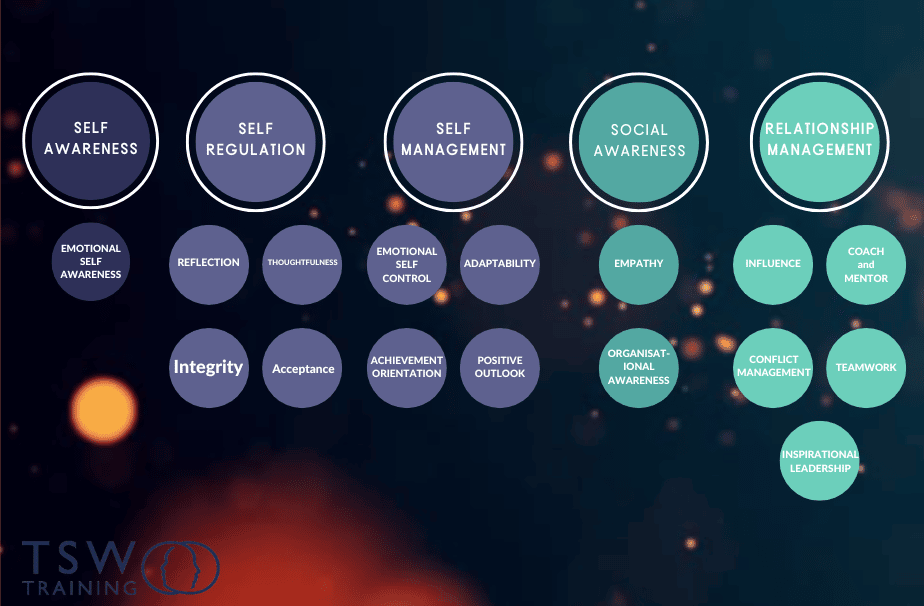
Fig. 1. The 5 components of emotional intelligence (Click to expand)
Emotional intelligence is the ability to understand and manage your own emotions and feelings, as well as those of others.
As a manager, you can apply emotional intelligence to achieve self-awareness, objectivity and equality, all in the name of improving results, workplace culture and employee fulfilment.
Goleman breaks down EI into five components:
- #1. Self-awareness
- #2. Self-regulation
- #3. Motivation
- #4. Empathy
- #5. Social skills
The five components of emotional intelligence in the workplace
#1. Self-awareness
Self-awareness is the ability to recognise and understand your own thoughts, feelings, and emotions, which can all affect your interactions with others.
For example:
- If you are a manager with low self-awareness, you may struggle to recognise and understand your own emotions and thoughts, which can lead to difficulty in regulating your behaviour and making sound decisions.
- If you are a manager with heightened self-awareness, you can recognise and understand your own emotions and thoughts, and how they impact your behaviour and decision-making.
You understand your strengths and shortcomings, as well as how you might respond in certain situations and to specific individuals. That information empowers you to achieve your goals, motivate others, and foster a fair, inclusive, and sustainable culture.
Self-awareness helps you temper your communication style and gives you a reason to listen to the people around you.
In other words, you’re self-aware enough to know when you need help, and from whom and how you can apply your characteristics to achieve a favourable outcome.
💡A Working Example of Low Self-Awareness 💡
Luka, a newly promoted manager in an office environment, is helping his team complete their day-to-day tasks. His actions are being interpreted as micromanaging.
Luka senses the tension but hasn’t made the mental jump from worker to manager. He doesn’t realise his actions are detrimental to team performance.
When Luka’s employees say, “Don’t worry, you’re busy, I can do it”, he doesn’t hear the truth of the statement – that his focus should be elsewhere – and assumes they’re demotivated.
A solution: To gain more self-awareness as a new manager, Luka could keep a self-reflective journal to help him process the situation. Or, he could use the Eisenhower Matrix to help him prioritise and delegate.
#2. Self-regulation
Think back to your last employer who acted impulsively or irrationally. Did you trust them? What was work like under their watch?
An emotionally charged environment is often marked by unresolved conflict. It feels tense and distracting. You probably felt like you couldn’t contribute without fear of reprimand.
Calm in the face of adversity is not a natural response or something you’re born with.
The emotional brain is far faster (and older) than the rational frontal cortex. It sends us into fight-or-flight mode whenever we need to defend ourselves, and it can happen at innocuous and frustrating moments.
💡A Working Example of Low Self-Regulation💡
For example, when an employee challenges your decision, or if you’re asked a question you don’t know the answer to in a meeting.
Self-regulation is a skill you need to practice, and there are great rewards if you can master it.
You become approachable, equipped with conflict resolution skills, and able to create a nurturing environment, leading by example.
#3. Motivation
Goleman’s third component refers to motivation for enjoyment rather than money or a promotion.
What is motivation at work?
Motivation at work refers to the drive or inspiration an individual feels to perform a task or achieve a goal within their job or career. It is the inner drive that motivates an employee to put in the required effort and achieve success in their work.
There are different types of motivation, including intrinsic motivation, which originates from within oneself and is driven by personal interest and enjoyment, and extrinsic motivation, which stems from external factors such as rewards or incentives.
💡Five things you can do to drive self-motivation💡
- Find meaning and purpose in your work: When you feel that your work is essential and has a greater purpose, you’re more likely to feel motivated and engaged.
- Set clear, specific, and challenging goals for yourself: Having a clear sense of what you want to achieve and a plan for how to get there can provide direction and purpose, and increase motivation.
- Focus on your strengths: Emotionally intelligent individuals tend to be aware of their own strengths and use them to their advantage. Instead of focusing on your weaknesses, focus on what you do well and use that as a driving force for your motivation.
- Self-reflect and monitor your emotions: This can help you become aware of your own emotional state and recognise when your motivation is low, as well as identify what might be causing it.
- Reward yourself for your progress: Celebrating your progress and small wins can help you stay motivated and focused on your goals.
Even in the face of a bad day, you can still find the silver lining, feel energised to fix problems and be determined to cheer the people around you onto the next success.
It’s self-motivation. You’re doing it for you, to fulfil your personal goals and needs, to drive higher performance.
#4. Empathy
If you can understand the emotions of others and relate to them, you can view problems from multiple perspectives and make more objective decisions. Empathy defuses bias.
Being an empathic leader means you’re a good listener and interpreter, attuned to body language and facial expressions.
💡A Working Example of Empathy💡
Imagine that you are a manager at a company, and one of your employees has been struggling with their work recently. Instead of immediately jumping to criticism or blame, you could try to understand what might be causing the employee’s poor performance. You could say something like:
“I’ve noticed that your work has not been up to your usual standard lately. Is everything okay?”
An empathic manager is considerate, balanced, and fair.
⏰Key Point: Applying empathy gives you a superpower. You can read what your employees need from you – when they need a challenge, when they need constructive feedback, and when they require additional training. It’s particularly effective for leaders navigating the five dysfunctions of a team.
#5. Social skills
It’s essential to build a strong rapport with your team.
Not only is it part of good leadership, but it’s also essential to boosting staff productivity and increasing loyalty.
Having solid social skills, such as active listening, verbal communication, nonverbal communication, leadership, and persuasiveness, enables you to connect with your team.
💡Discover our “Master Emotional Intelligence Course”💡

Our carefully designed Emotional Intelligence Course is tailored to provide you with practical, real-world skills that will elevate your personal and professional life.
Dive deep into the core components of Emotional Intelligence and uncover how they directly relate to your success (available virtually or in-house).
How to handle low emotional intelligence
Symptoms of low emotional intelligence will impact workplace performance.
Argumentative and emotionally charged workplaces, where a blame culture prevails and no one listens, often lack leaders with emotional intelligence. If it sounds like where you work, or like your team, emotional intelligence can be taught and practised to turn around the culture, productivity and efficiency.
Goleman believes that emotional intelligence can be learned or improved. His five components make it easier for you to identify areas for improvement and work towards understanding and managing emotions.
⏰Key Point: Having strong emotional intelligence skills will enable you to empathise with your team, communicate effectively and manage conflict. These three capabilities are qualities of an effective leader or manager.
How can I use emotional intelligence to help motivate your team?
One of the best approaches to motivating your team is by practising emotional intelligence at work—this can help your team strive for success and reach their full potential.
Goleman’s motivation element is key here – motivation is an infectious quality. By being self-motivated, you can inspire team members to become motivated.
Utilising your social skills, another of Goleman’s components, will play a part in encouraging your team to go the extra mile. If you form a strong relationship with your employees, they’re more likely to go above and beyond.
Are there any disadvantages of using emotional intelligence in the workplace
There are pros and cons. Emotional intelligence in the workplace is highly beneficial, but it can also have disadvantages when used excessively.
Emotional intelligence can be used to manipulate others. While this shouldn’t be on the agenda for anyone in leadership or management, it’s essential to be aware that emotionally intelligent members of your team might use EI to their advantage.
However, generally, the use of emotional intelligence at work has a positive impact. It can increase job satisfaction and performance through the following:
- Controlling stress and minimising conflict
- Creating smoother, easier adjustments
- Improving communication and teamwork
- Increasing motivation
- Promoting a positive work environment
Above all, as a leader or manager with high EQ, you’ll be effective and respected.
9 Ways to Improve Your Emotional Intelligence
To improve your emotional intelligence, you should first identify your weaknesses in line with each of Goleman’s five components.
Once you have identified the areas that need attention, you can actively practice emotional intelligence and make improvements as you go. We’ll leave you with some tips to get started with:
9 Expert Tips to Help You Improve Your EI
- Keep a journal, record your observations and responses and get to know yourself. Learn what your values are and why they are essential to you, what motivates you, and what riles you.
- Ask for feedback from others: “Am I aware of what’s happening around me? Do I regulate my emotions well? Do I appear motivated? Am I empathic? What are my social skills like?”
- Take responsibility and stop blaming everyone around you.
- Take it slow and don’t react; take a minute to think and breathe.
- Practice seeing the good in the world.
- Put yourself in other people’s shoes: “I wonder what Ty would think about that? What about Olivia?”
- Sit back and watch body language, ask yourself, “What does that posture mean?” and imagine, “How would I respond to that?”
- Practice responding to emotions, whether you’re reading a book or watching TV. Take a second and think about how you would advise, comfort, or support a person in need.
- Book a spot and attend our brand new course on emotional intelligence.