We’re all taught the dangers of electrical appliances as children, and when it comes to the workplace, we should still be aware of potential electrical hazards, and the risks they pose.
Key Points:
- Fatalities at work have been steadily declining since the 1970s, mainly due to the introduction of stricter health and safety policies that help keep workers out of harm’s way.
- If you’re complying with regulations around electrical hazards, you’re minimising the chances of your team getting hurt.
- Electrical safety is paramount for your team to prevent injuries and reduce the chance of electrical accidents.
What are electrical dangers?
Electrical dangers can be found in numerous settings, but the construction industry presents even greater risks to be aware of.
An electrical danger could be:
- Faulty electrical equipment
- Exposure to live parts
- Electrical parts located near water
- Improper grounding of circuits
- Equipment that isn’t correctly installed
What are the risks?
There are numerous risks associated with electrical work, so it’s essential to collaborate with a specialist who understands their responsibilities.
If any of your team were to come into contact with an electrical danger, they could suffer shocks and burns. In worst-case scenarios, people die as a result of an electrical danger.
Faulty electrical equipment can also cause fires and explosions, resulting in serious harm to anyone in the vicinity.
A thorough risk assessment will help you to spot dangers and minimise the risk to your staff.
What injuries can occur?
The Health and Safety Executive (HSE) details the injuries that can affect workers if they’re working with electrical equipment.
- The higher the voltage, the more serious the injury from an electrical hazard if someone is exposed to it for more than a few seconds.
- Electric shocks can stop signals between the brain and the muscles. That can result in muscle spasms, which can break bones, the heart not being able to beat properly, and difficulty breathing, among other things.
- The impact will depend on the magnitude of the voltage, the body parts affected, and whether the person was dry or damp when it happened.
- Indirect injuries can sometimes occur as a result of an electric shock; for instance, someone could fall from a height due to the loss of control.
- Workers can also suffer electrical burns when the current flows through the body, burning the tissue in its path.
- Faulty equipment that becomes overheated can cause another type of burn, known as thermal burns, if someone gets too close to its surface.
- The injuries that can be incurred from electrical dangers are serious, so it’s crucial to minimise the risk to your team as much as possible.
Common electrical hazards to be aware of
There are a few things you can do to keep electrical injuries to a minimum and follow best electrical safety practices:
- Make sure everyone is aware of live circuits and prevent anyone who isn’t fully trained from coming into contact with them
- Don’t skip lockout procedures for the sake of time – safety is more important
- Give all staff the correct training so everyone is on the same page
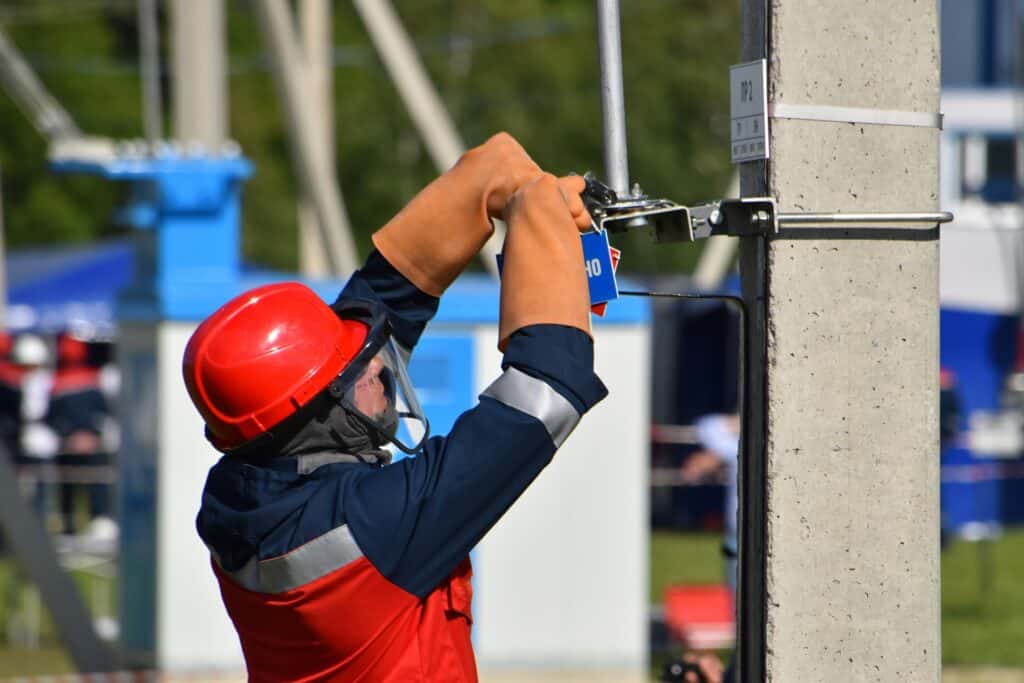
- Kit your staff out with relevant Personal Protective Equipment (PPE)
- Make sure all grounding is done correctly
- Replace extension cables that are falling apart
- Replace damaged electrical tools as soon as possible

What are an employer’s responsibilities when it comes to electrical safety?
The Electricity at Work Regulations 1989 outline the responsibilities you have towards your team.
Any equipment they’re using needs to be compliant, safe, and unlikely to cause harm. It should also be checked regularly to make sure it still meets the standards required to keep everyone healthy and happy.
Some of the regulations you’ll need to abide by include:
- Checking all electrical equipment before it comes onsite to make sure it’s safe to use
- Getting electrical equipment safely installed by someone qualified to handle it
- Giving your team the training they need to understand electrical risks and how they can protect themselves
- Keeping all live circuits away from anyone who isn’t qualified to work with them
How can companies manage and prevent injuries from occurring?
In the first instance, completing a risk assessment will help you identify electrical hazards in your workplace and determine how to protect your team as much as possible.
Once you’ve established what the risks are and how to control them, you can start training your team to look out for any hazards in the workplace.
Any machinery your team are using onsite should be checked and maintained regularly, as well as having an emergency power-down button, in case it’s needed. Someone should be responsible for turning all electrical equipment off at the end of the day or when it’s being cleaned.
Here are some more tips for preventing electrical-related injuries:
- Don’t overload plug sockets or try to force a plug into a socket if it won’t fit
- Make sure any electrical wires are not trip hazards
- Take employees off any faulty machines and only allow a qualified person to take a look at the problem
- Take great care around overhead power lines, and ensure no one is working underneath them with equipment that could come within six metres
- Keep all electrical equipment away from water