As our focus on saving the planet intensifies, workplaces across the UK are adapting to new ways of working sustainably.
With more regulations coming into effect and companies starting to make their supply chains sustainable, there’s no better time to start bringing green processes into your business.
But while some industries are moving quickly to adopt sustainable practices, others are slower to adopt, putting them at risk of being left behind in the green transition.
Key Points
- According to research, the agricultural, manufacturing, construction, and healthcare sectors have the largest share of green-skilled workers. The energy and mining sectors are also growing rapidly.
- Sectors such as the arts, entertainment, and finance have fewer employees with green skills, but this will no doubt change over the coming years.
- In the future, there will be many opportunities to apply green skills across sectors such as construction, engineering, and agriculture, and new job roles will be created to meet the demand for sustainably minded workers.
Which sectors are embracing green business skills?
The World Economic Forum’s 2020 analysis showed that sectors such as energy and mining are hiring green-skilled workers at a fast rate. Green skills will soon be essential across industries as natural resources become increasingly scarce.
However, overall, there are more green-skilled workers in the agricultural sector, as well as manufacturing, construction, and healthcare. It’s going to become particularly crucial for those who are part of a supply chain to make sure they’re doing all they can to be sustainable, as consumers and organisations begin to phase out partners that aren’t deemed ‘green’.
Which sectors are not embracing green skills?
At the moment, sectors such as the arts, entertainment, and finance have fewer employees with green skills, but this will undoubtedly change over the coming years.
In the finance industry, green issues will become more critical when it comes to investing in sustainable and ethical organisations. As more people become more savvy with their money, banks will need to focus on identifying green alternatives if the companies they work with aren’t trading sustainably.
Which sectors will utilise green skills most in the future?
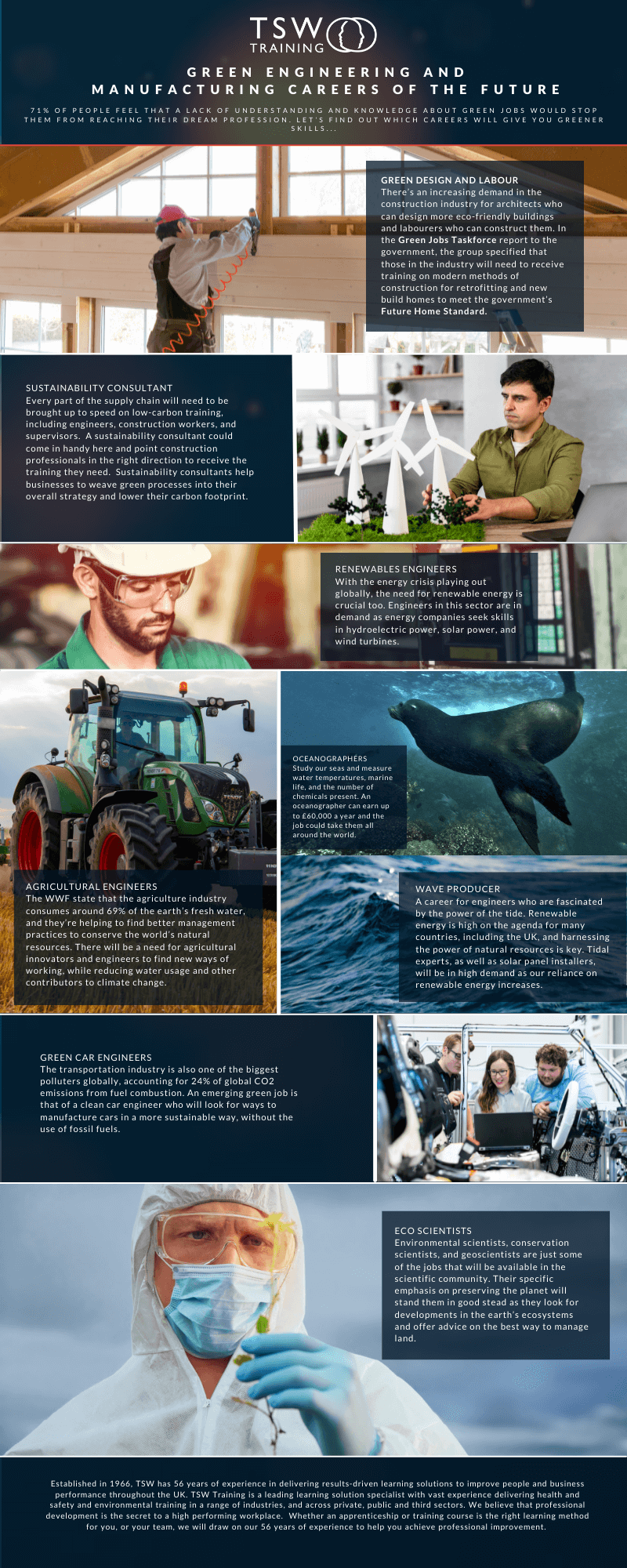
There will be many career opportunities to apply green skills across sectors such as construction, engineering, and agriculture, and new green job roles will be created to meet the demand for sustainably minded workers.
Building regulations will require the construction industry to be green-skilled at every level to ensure sustainable processes are carried out end-to-end. Buildings and homes will need to meet greener standards to comply with the government’s Future Homes Standard, too.
Scientists and engineers will be in high demand across various sectors as they develop new ways of working to benefit the environment. Natural scientists and geoscientists will help us understand how the world is changing, while engineers adapt to working on innovative projects such as low-emissions vehicles.
The agricultural and transportation sectors will need to be overhauled to reduce carbon emissions, and green-skilled workers will be instrumental in this.
How can businesses better adapt to green-skilled workers?
Bringing workers with these abilities into your business could be hugely beneficial.
It’s important to understand where your green-skilled workers will be best placed before you decide to hire them. A consultant or a team member could conduct a gap analysis to identify where the business would benefit most from an employee with green skills.
A green-skilled worker can monitor your processes and identify where the company could become more sustainable. You can then adapt your procedures to make the most of the green-skilled workers on your team.
It’s not enough to assume that the senior leadership team can create a sustainability strategy that will be implemented immediately by the rest of the workforce. As a leader, you’ll need to get everyone in your workplace on the same page regarding green issues and show them the impact their actions can have. It’s worth training your current staff and hiring new green-skilled workers so your entire team understands that changes will be needed for the company to become greener.
“Now is the time to prioritise sustainability in your business,” says Rachael Gooding, sustainability consultant and associate trainer at TSW Training. “Allow people to have the time to do training, to think differently, to change the way we view what consumers want.
“People want to purchase from a business with purpose. They want to know their purchase is doing well. There are all these drivers that will force businesses to work differently and take advantage of sustainability.”
Read more:
- How Will Gen Z Be Key To Future Sustainability Practices For Businesses?
- Equipping the new generation with green skills
However you decide to bring green skills into your business, it’s vital that you act sooner rather than later.
What courses are out there to help make your workplace greener?
ISEP courses offer staff the chance to learn more about sustainability, how it can impact their working life, and why it’s essential to become green-skilled.
Depending on the level you choose, the course can take between one day and fifteen days, and courses are available for all levels of the business.
See our current ISEP courses below:
- ISEP Certificate In Environmental Management
- ISEP Foundation Certificate In Environmental Management
- ISEP Pathways to Net Zero
- ISEP Environmental Sustainability Skill for Managers
- ISEP Environmental Sustainability Skill for the Workforce
- ISEP Certified Internal EMS Auditor
- ISEP Carbon Footprinting and Reporting
If you’re unsure which course is right for you, contact our friendly team at TSW Training.