The Johari Window is a valuable technique that managers and team leaders can utilise to enhance communication, self-awareness, and productivity at work.
The name “Johari” is derived from a combination of the names Joseph Luft and Harry Ingham, two psychologists who worked together to create the model in 1955.
Here, we examine what it is and how it can be applied to enhance your team’s performance.
⏰Key points:
- Participants choose a set of adjectives they feel best describe themselves, and the rest of the group does likewise. Then, the results are compared and grouped into one of four sections, or ‘panes.’
- Through a process of disclosure and feedback, openness and understanding are encouraged. This, in turn, will improve communication at work, team development, group dynamics and equality. It also helps limit conflict, confusion, and misunderstanding.
- While this can be a helpful exercise, it’s best to apply it with sensitivity and avoid judgment and negativity.
Take the first step towards becoming an open and effective leader—enrol in our Core Skills for Team Leaders course today and unlock tools to build trust and foster open communication within your team.
What is the Johari Window?

The Johari Window is a model used to help people better understand their relationships both with themselves and with others. As such, it’s a useful technique for improving an individual’s self-awareness and development in group situations. It also aids two-way communication with the group.
The exercise takes the form of disclosure from the participant and feedback from the group. A list of adjectives is drawn up, describing attributes which may or may not apply to the participant (eg ‘adaptable’, ‘independent’, ‘helpful’, etc). This information can relate to the person’s attitudes, skills, behaviours, emotions and so on.
The participant discloses which characteristics they think apply to them, and the group provides feedback on which adjectives they believe apply. These are then grouped into the four ‘panes’ of the Johari Window, which we’ll examine below.
For corporate settings, the Johari Window is used as a heuristic (hands-on) exercise, which means it’s not really intended to be an exact science, but rather a rule of thumb. When applied to the workforce, it’s designed as a tool to help get the best out of your team – not to psychoanalyse them.
Brief History of the Johari Window Theory
The model was developed in 1955 by American psychologists Joseph Luft and Harry Ingham. The theory came about through observation of group dynamics in the University of California. Joseph Luft continued to develop and improve the model over time.
The word ‘Johari’ is a combination of the psychologists’ first names, and the ‘window’ refers to the four ‘panes’ used to visualise the exercise.

Four Panes of the Johari Window Model
The four ‘panes’ of the window are referred to variously as sections or quadrants, and have also been likened to rooms in a building.
Characteristics can be attributed to each section based on their visibility to the participant and/or members of the group.
Pane 1: Open area/arena
The first section is to be filled with attributes recognised by both the person and their peers. For example, if somebody views themself as diligent, and the group has also identified this characteristic, it occupies the open area.
This is the area where communications are most likely to hit their mark, and the aim is to grow this area through disclosure and feedback. In essence, the more the group understands the participant, and the better they know themselves, the more effective working together becomes.
Pane 2: Blind spot
This is the area populated by characteristics identified by the group, but not by the participant. These are qualities that the person may be unaware of.
As such, they might find the group interprets them differently from how they expect. Maybe they sometimes talk over people without realising it, or underrate specific abilities. It’s worth noting that it’s best to approach the exercise with positive intentions; you’re not trying to produce a list of bugbears.
The aim is that, through increased self-awareness and understanding, the blind spot can be minimised.
Pane 3: Hidden area/façade
This is the area in which personal characteristics are known to the person, but not to the group as a whole. This area is likely to be larger with new starters, for instance, who haven’t become well-known among the group yet. With disclosure, this area can be reduced, allowing the group to communicate more effectively with the participant and understand their motivations.
It may also be an area containing some characteristics which the participant wants to keep guarded. As such, it’s essential to realise the person may not wish to reveal everything about themselves, and it should be handled with sensitivity.
Pane 4: Unknown area
This is the section populated by characteristics that neither the group recognise in the participant, nor the participant recognises in themselves.
This section can be used by the participant for self-improvement: eg identifying skills they may not recognise that they have. But for the purposes of the group exercise, this section is essentially ‘other’ – ie the area the group doesn’t focus on.

Examples and Applications of the Johari Window Theory
As we just alluded, the model has a number of applications. Used correctly, it can be a helpful tool in culture management.
Let’s look at three Johari Window examples demonstrating how the approach could prove advantageous for different teams or scenarios:
- In a 1:1 meeting or appraisal setting
- Helping to embed a new team member
- Improving team connectivity
Scenario 1: Using the model as part of a 1:1 performance review or appraisal.
| Open Area | Blind | |
| Known to others |
Organised Dependable Hardworking Thorough Precise |
Determined Passionate communicator |
| Hidden Area | Unknown | |
| Not known to others |
Ambitious Strategic independent |
Persuasive Empathetic |
Discussion points:
- Open Area: The worker regards themself as a strong and independent person, offering subject matter knowledge, reliability and great organisational skills.
- Blind Spot: Share that the worker’s passion and knowledge shows. However, in scenarios like meetings or discussions with more introverted colleagues, those qualities may be misconstrued, making them seem unapproachable or disruptive to group discussions.
- Hidden Area: This could be an area where the worker highlights that they have other skills. Presenting opportunities for career and personal development.
- Unknown: Could the worker suit a managerial position? If they haven’t led a team before, key characteristics like empathy highlight that they could be a strong leader. Could they stand to benefit from leadership development training courses?
Scenario 2: Helping to integrate a new team member
Now, let’s look at another typical Johari Window exercise example. In this scenario, a new team member has joined.
Because the individual is new to the team, less is known about how they can impact or enhance performance. Those unknown qualities are shown by the imbalance in the two halves of the diagram.
| Open Area | Blind | |
| Known to others |
Friendly Enthusiastic Hardworking Creative Marketing-savvy Willing to help |
Reserved |
| Hidden Area | Unknown | |
| Not known to others |
Experienced Strategic Overwhelmed Nervous Perfectionist |
Confident Charismatic |
Discussion points:
- Open Area: The new team member is eager to learn and brings fresh perspectives on how the business can achieve its goals and reach new audiences.
- Blind Spot: Because the worker is new, the team recognises that they are reserved and less likely to offer thoughts in group discussions.
- Hidden Area: The worker may be feeling nervous about their ability to deliver in the new position – perhaps there are new tasks that they are inexperienced with and unsure about.
- Unknown: Little is known about how the team member could develop. However, from the known quantities, they could benefit several team areas/tasks.
Scenario 3: Improving team connectivity through skill attribution.
Until now, we have focused on the Johari Window tool as an opportunity for self-awareness and individual growth.
However, it can also be a practical approach for fostering team-wide reflection.
In this scenario, we applied the model like Belbin’s team roles theory. Often, multi-functional teams struggle with inefficiency due to communication and skill attribution issues, which can lead to the formation of knowledge silos.
| Open Area | Blind | |
| Known to others |
Collaborative Transparent Specialised Reliable |
Unapproachable Overly technical Assumptive |
| Hidden Area | Unknown | |
| Not known to others |
Multi-talented Adaptable Overlooked |
Innovative Agile Untapped leadership |
Discussion points:
- Open Area: Helps the team identify the go-to people for certain tasks/skills. Ensure there is a knowledge of and processes for shared responsibilities to expand the Open Area more and avoid common team dysfunctions.
- Blind Spot: Many teams fail to realise they could be gatekeeping knowledge or making processes overly complex. There may be incorrect assumptions that the team already has a clear understanding of key information.
- Hidden Area: Team members may possess hidden skills. But they haven’t shared them as they are not relevant to their core roles and responsibilities.
- Unknown: Has the team ever tested cross-functional collaboration? Could they work well together? There could be untapped leadership potential in the team.
Johari’s Window Flexibility
Each of these scenarios is markedly different, but the model’s flexibility ensures it can still be implemented to achieve positive outcomes and enhance team communication.
You will see that we have used a simple table format to recreate that classic ‘window’ view. For complete transparency, we recommend either including a new column or using bullet points below the table. These new sections can add perspective by expanding on why those adjectives exist in each quadrant.
As a line manager, leader, or business owner, you may be expected (or want) to conduct this exercise with your team. To get the best from the model, keep the discussion positive and progressive.

How Can the Johari Window Improve Communication and Productivity at Work?
At its heart, the Johari Window is about getting everybody on the same page. Ultimately, the aim in a group situation should be to expand the top-left pane or ‘open area’. This is the most productive and effective area in which to be working.
This is the arena in which the participant’s attributes are visible and understood by both themselves and their peers alike. As such, communication and cooperation are optimal in this area; whereas conflict, confusion and misunderstanding are minimised.

When Would the Johari Window Be Used?
This model has numerous timely applications in the workplace. For instance, it could be a valuable exercise for a one-on-one or annual appraisal. This can help the participant understand why they’ve received the feedback they have.
Another potential application is introducing a new member to an otherwise well-established team. In addition to being a ‘get-to-know-you’ activity, this can help the group understand how best to work with the new member. Again, this reduces the likelihood of conflict and misunderstanding.
It’s worth exercising judgment here. These exercises can be beneficial in various situations, such as introducing a new manager or team leader. However, they may not be the best exercises for a new, junior staff member or someone who lacks confidence.

How to Use the Johari Window
Although it is most popularly used as a self-reflection tool, a good Johari Window exercise for managers is to apply the approach to both personal or individual scenarios as well as team discussions.
But how can you apply the theory to both scenarios, and how would it work?
Whether you’re conducting reviews of your own performance or that of a team, the key to getting the most out of the model is solid questioning and honest responses.
For example, if you’re a manager or business owner conducting a personal evaluation, here’s a step-by-step view of some questions you can ask yourself in each quadrant.
Using Johari Window for a Personal Evaluation
1: What Do I Know About Myself & Others Also See (Open Area)
The first step in this process is all about recognising your own strengths and skills as a manager and defining your leadership qualities. Do this through a list of questions like:
- What leadership qualities do I believe I excel in?
- How do I communicate with my team?
- What feedback have I received that confirms my strengths?
2: What Others See But I Don’t (Blind Spot)
The next step is to understand how your team perceives you and your management style. This is the perfect opportunity to leverage 360 feedback to improve as a leader.
- How would employees describe my management style?
- Do I unintentionally create barriers to communication?
- What constructive criticism have I received that surprised me?

3: What Do I Know But Don’t Share? (Hidden Area)
Next, you need to define any unspoken thoughts, feelings, plans or skills you may have had but not shared.
- Do I struggle to show vulnerability or uncertainty?
- Are there any skills or aspirations I haven’t yet shared with the team?
- How transparent am I in my decision-making processes?
4: Anything Neither I Nor Others Know About Me (Unknown)
The final stage in this self-reflection process seems ambiguous. But it’s less about trying to guess the unknown and more about highlighting lesser-known personal skills and plotting areas for continued growth.
- Have I ever been in a situation which revealed a skill or strength I wasn’t aware of?
- What new challenges do I think could challenge my leadership skills?
- What business area or skill interests me most?
- How effectively do I receive and utilise constructive feedback?
Reflection like this fosters self-awareness, a crucial factor in developing emotional intelligence and becoming a skilled leader.
Alternatively, another Johari Window exercise involves using the framework to build a team and foster collaboration.
Using the Johari Window for Team Building
Here’s how an example step-by-step layout would look for this:
1: Open Area
- What are each team member’s core strengths?
- Do we openly communicate our goals and challenges?
- How do we collaborate across departments?
- What are the current processes for cross-departmental collaboration? (Are there any?)
2: What Others See But I Don’t (Blind Spot)
- Do specific individuals unintentionally dominate group discussions?
- Are there any misunderstandings about team positions and role/task attribution?
- How do we action feedback within the team? (Are there any examples?)
3: What Do I Know But Don’t Share? (Hidden Area)
- Do any team members possess skills, strengths or interests they haven’t shared yet?
- Are there any unspoken frustrations, concerns, or barriers that affect productivity?
4: Anything Neither I Nor Others Know About Me (Unknown)
- What new tasks, projects or responsibilities could reveal hidden talents?
- Do the team have enough access to personal growth opportunities such as training courses?
- Have we experimented with other working styles to improve efficiency?
Knowing how to gather and interpret feedback is crucial for maximising the benefits of the Johari Window model. However, as a manager, understanding how to give feedback as a way to foster positive change is equally key.
In fact, it could be worth exploring the Feedback Matrix tool and overlaying it onto your window view as a way to gather, establish, celebrate and focus on specific feedback sections in relation to your performance perception. You can then use the results to set SMART Goals for personal or team progression.

Johari Window Exercises for Teams and Individuals
At first glance, the Johari Window model appears straightforward. However, the thought of implementing it can be daunting – especially as a team-building exercise. But it doesn’t need to be overly complex or disruptive.
Here are some exercises to consider.
Johari Window Exercises for Self-Reflection
When trying to get the best information in each area of your self-reflection, it helps to keep things simple:
Open Area
- List five words you believe best describe your leadership style
- Ask colleagues to describe you in five words
- Compare the responses – where are the overlaps?
- Highlight what you bring to the workplace based on these words
Blind Spot
- Collect anonymous feedback from two questions:
- What is one strength I bring to the team?
- What is one area I could improve?
- Do any patterns emerge in the responses
- How could those blind spots be turned into areas for development?
Hidden Area
- List one career aspiration that you haven’t shared with your manager
- Write down three strengths you haven’t shared/used yet
- Create an action plan to implement those strengths in your work
Unknown
- Highlight one task that is out of your comfort zone, e.g. mentoring, public speaking.
- Take an opportunity to do that task.
- Record your thoughts: What went well? What could be improved? What would you do differently next time?
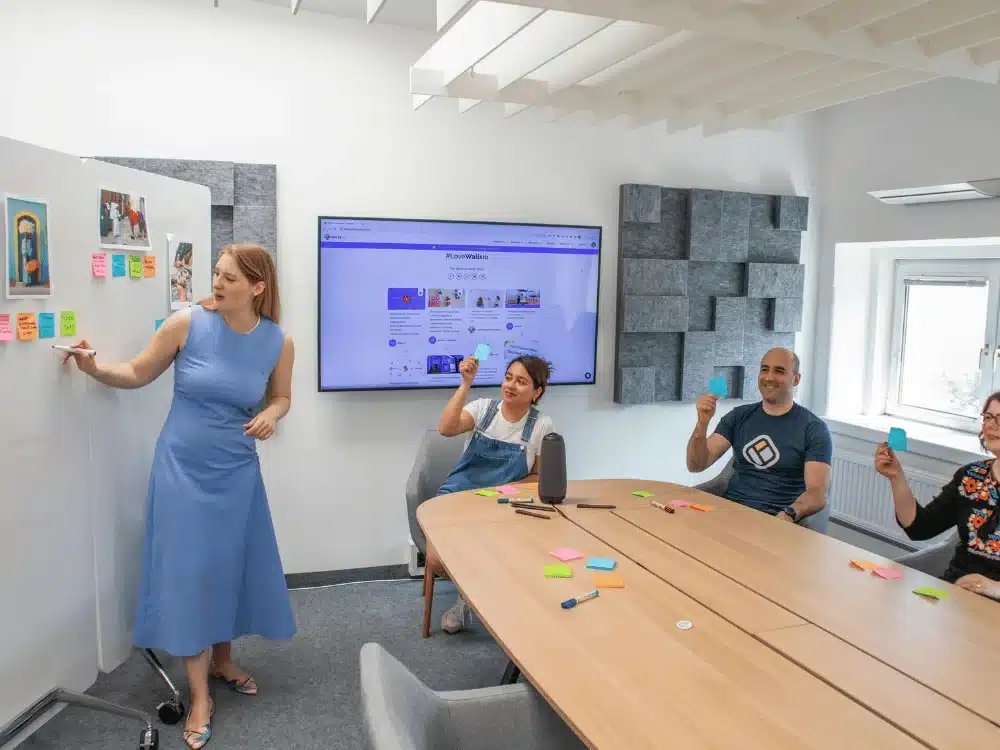
Johari Window Exercise for Team-Building
Some of those self-reflection exercises can be adapted to help within a team-building scenario. However, there are some other exercises you can implement to drive responses in each area of the window. Let’s take a look at some.
Open Area
- Ask each team member to write down 3 key strengths they bring to the team
- Have everyone share their strengths in the meeting
- Create a “Team Strengths” board to showcase the breadth of talent
Blind Spot
- Pair up team members and ask them to describe each other’s working style
- Ask them:
- “What is one great thing about the way they work?”
- “What’s one thing they may not realise about the way they work?”
- Share insights in a constructive way
Hidden Area
- Ask the team to write down one skill they have but don’t use
- Ask them to write down one hobby they are passionate about
- How can those interests or attached skills be implemented into the team?
Unknown
- Pair up individuals with different roles in the team
- Have them shadow or perform each other’s role for the day/half a day
- Hold a group discussion to highlight any skills/tasks they didn’t know each other did
Advantages and Disadvantages of Using the Johari Window Model
The Johari Window is a powerful tool for enhancing key business attributes, such as teamwork, communication, and self-awareness.
However, like any training framework, it comes with its strengths and limitations.
On the one hand, it can help engender trust and transparency in your business. On the other hand, it can be reliant on your team’s ability to react well to constructive feedback, which can be challenging.
Let’s take a closer look at those positive and negative elements in more detail now.
Advantages
As mentioned, this technique offers numerous positive benefits for both the individual and the team.
The individual may experience an improvement in self-awareness, which can facilitate personal growth and development. It can enhance communication and understanding, while also promoting overall inclusion and equality within the team. Likewise, it may also boost interpersonal relationships.
In turn, a better understanding of the individual allows the team to work with them more effectively and help them reach their full potential. This can enhance the group dynamic, facilitate further team development, and also help improve inter-group relationships.
Disadvantages
A note of caution here. There are some potential drawbacks to using this model. One is that some feedback could be perceived as negative by the participant. It’s essential to be sensitive to the participant and avoid being judgmental when applying attributes.
In addition, there may be characteristics which the participant doesn’t want people to know or fears that may be spread outside the group. It’s important not to push the participant beyond a level of disclosure that they’re comfortable with.

Criticisms and Limitations of the Johari Window Theory
As we just mentioned, the Johari Window tool is not without its flaws. Let’s dive deeper into some common challenges faced by the model.
- False disclosures: The main challenge to the Johari Window is that it relies on participants’ honesty. Of course, any decent self-reflection tool calls for honesty to be truly effective. However, when this is opened up as a model for team-building, the process relies on the whole team offering honest and constructive feedback.
- Fear of expression: Developing on that point of constructive feedback. Some team members may not feel comfortable offering their thoughts to managers or other team members. Whether that’s due to a fear of reprisals or from a cultural standpoint, a lack of disclosure can be a barrier for the model.
- Confidentiality concerns: There is a legitimate concern that thoughts shared by individuals in the Johari Window discussions may be passed on without consent. Additionally, while the process calls for honesty, it’s essential to understand what information should and should not be shared.
- Oversimplification: Another concern with the model is that it super-simplifies human behaviour into four predefined categories. When, in reality, business challenges and personal interactions are often much more complex.
- Feedback delivery: Everyone is different. Varying age groups and cultures react to feedback in various ways. Therefore, everyone in a team session needs to understand how to convey thoughts constructively and positively that won’t cause distress or conflict, while avoiding any potential miscommunication.
Limitations Aside
Despite these challenges, the Johari Window remains a potent tool in the realms of self-evaluation and team management.
Although its simplicity can sometimes be interpreted as a curse, it can also be one of the model’s strongest attributes. This ensures the approach is comprehensible for all while remaining adaptable enough to suit both team and individual use cases.
Meanwhile, development tools like leadership training can help instil vital communication skills in your team. Making the delivery, reception and leveraging of constructive feedback easier and allowing it to become the fuel for continuous growth.
Contact our experienced team today to begin building knowledge within your team.

Frequently Asked Questions (FAQs)
Here are some frequently asked questions about the Johari Window model.
What Are the 3 Main Goals of the Johari Window?
The three main goals of the Johari Window model are self-awareness, improved communication and enhanced trust.
- Self-awareness: The model encourages managers to evaluate their own performance in conjunction with external feedback from colleagues, enabling them to identify their personal strengths and areas for improvement.
- Improved communication: By actively sharing constructive feedback and taking action on feedback from other managers and teams, a more positive workplace culture can be fostered through open communication.
- Enhanced trust: When colleagues share personal insights and analysis, it fosters an environment of transparency and trust.
What Are the Limitations of the Johari Window?
The five main challenges or limitations of the Johari Window are:
- People not sharing honest, constructive feedback
- People are taking the session as a chance to share personal gripes
- Team members are unwilling to share feedback due to fear of reprisal from colleagues and managers
- Fear of confidential feedback being leaked outside of the discussion
- Negative or defensive reactions to feedback
How Do Cultural Differences Influence the Johari Window Theory?
Cultural differences have a significant impact on the efficacy of the Johari Window. Societally, some individuals may be more reserved when it comes to sharing their reflections, experiences and aspects of their personal life.
Where confidentiality is the cultural norm, managers must recognise and respect this value.
Conclusion
The Johari Window is a valuable framework for highlighting and managing personal and team progression points.
It does suffer from a reliance on strong, honest and constructive feedback as well as inter-company confidentiality. However, when used effectively, it can unlock the power of communication in your team, enhance company culture, provide keen insights and even help spotlight some of your own hidden talents.
Leadership training can help embed the skills and knowledge necessary for your team to make the most of techniques like this model.
Get in contact today to find out more about how your skilled team could benefit from further development.